What does it take to build a supersonic sounding rocket by going beyond off-the-shelf components? thrustMIT, a student initiative, takes us inside the making of Varuna and the technologies behind it.
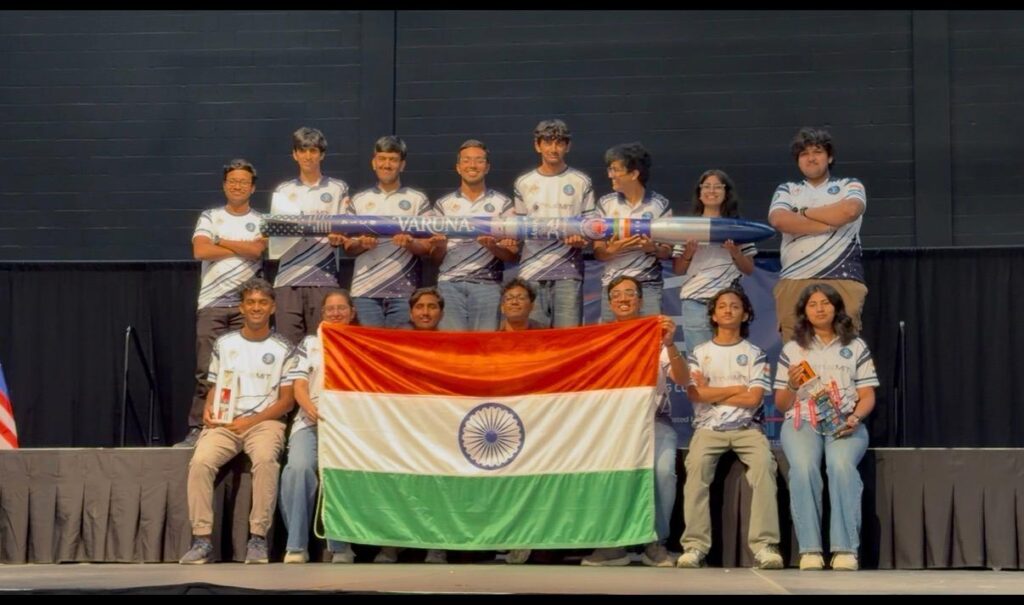
An Indian student team has shown that building a high-power rocket no longer means relying on off-the-shelf propulsion and flight electronics. At the 2026 International Rocketry Engineering Competition (IREC), thrustMIT from Manipal Institute of Technology successfully flew Varuna, a high-power sounding rocket featuring a student researched and developed (SRAD) solid rocket motor, an indigenous flight computer, and custom avionics. The mission also earned the team an Honourable Mention in the Space Dynamics Laboratory Payload Challenge, marking a significant milestone for one of India’s leading student rocketry teams.
In an exclusive interaction, Shaunak Purkayastha, team lead at thrustMIT, and Vedant Totla, head of management at the student rocketry team, explained how Varuna represents a shift from assembling rockets using commercially available subsystems to engineering the technologies that make them fly.
For the first time, the team moved beyond integrating off-the-shelf propulsion systems by developing its own SRAD solid rocket motor for the demanding 10,000-foot competition category. The students complemented it with an indigenous flight computer, custom avionics, telemetry architecture, and embedded electronics designed to improve flight performance and reliability. Alongside the rocket itself, they also flew an experimental magnetic levitation payload that remained stable under extreme launch accelerations, earning international recognition during the competition.
The journey, however, extended well beyond a successful launch. From redesigning critical hardware and reducing system weight to validating home-grown electronics under real flight conditions, Varuna became a platform for developing technologies that could eventually find applications beyond student competitions. The team also revealed that several of these innovations, including their flight computer, hybrid nozzle architecture, altitude detection algorithm, and magnetic levitation payload, are now being taken forward for intellectual property protection.
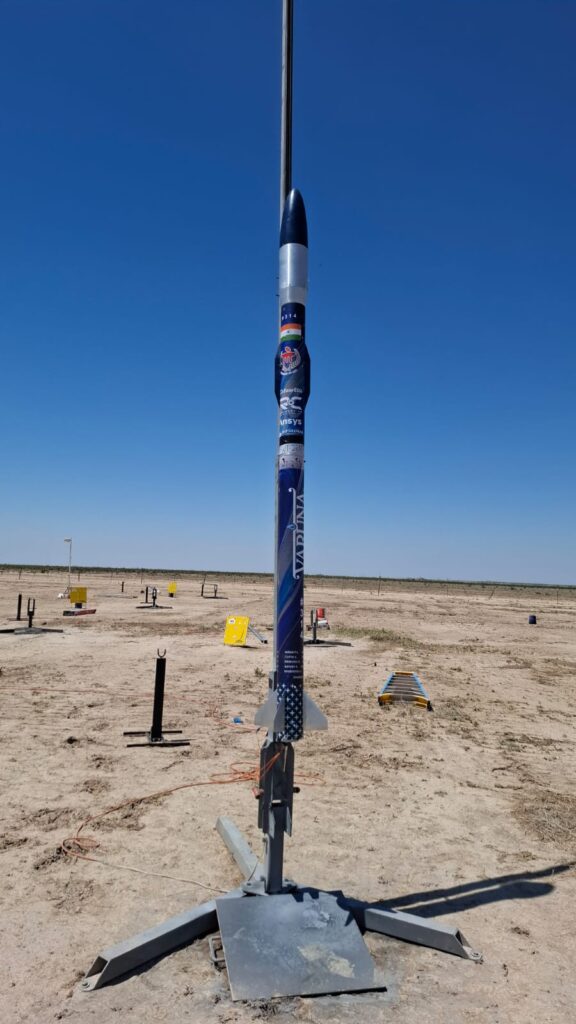
For the team, the achievement is not simply about reaching an altitude target. It is about demonstrating that students can design, build, test, and validate core aerospace technologies in India while laying the foundation for more advanced propulsion systems and avionics in the future.
How was the SRAD motor designed? What makes the flight computer different from conventional systems? Why did the team develop a magnetic levitation payload, and what comes next? The exclusive interview with Shaunak Purkayastha and Vedant Totla explores the engineering decisions, challenges and future roadmap behind the initiative.