We often expect a leader’s story to begin with a straight-A student who always knew exactly where she was headed. Malini Narayanamoorthi’s journey tells a different story.
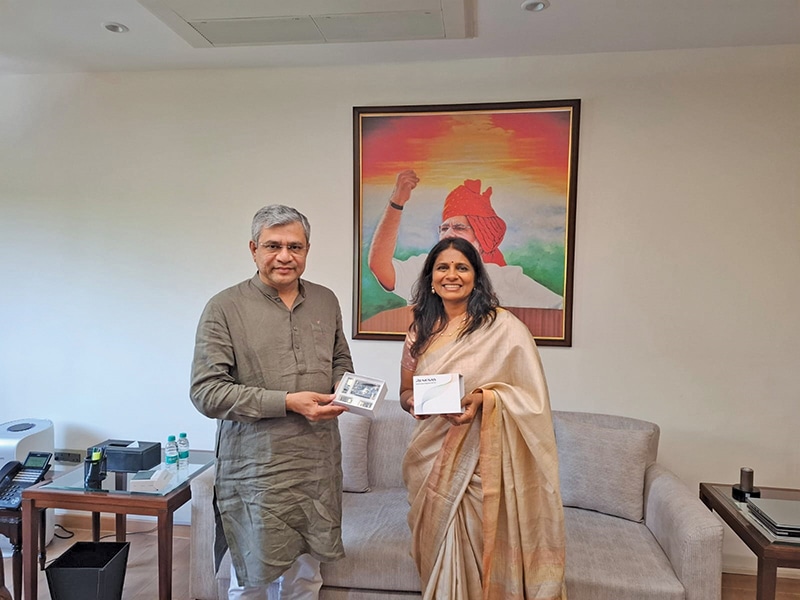
Today, as President of Renesas Electronics India, she leads the India division of a global semiconductor organisation. But long before the boardroom, she was a young girl standing on a school stage during a singing competition. Midway through her performance, her voice cracked, and the audience laughed. For many, that would have been enough to avoid the stage forever. Not Malini. She went home, practised relentlessly, and returned the following year to win. She readily admits she was not even a particularly good singer. Looking back, that moment feels symbolic of the way much of her life would unfold: facing setbacks, learning from them, and returning stronger. From average grades and early career struggles to personal loss and leadership challenges, hers is not a textbook story of perfection, but one of resilience, self-awareness, and the courage to keep moving forward.
A childhood built on participation over perfection
Growing up in what she fondly calls ‘old Bengaluru,’ Malini recalls her days at Cluny Convent, where she seemed to be everywhere, on the sports field, on stage, in debates, and in competitions. “If you put me in anything, singing, acting, poetry, I would just go do it,” she recalls with a laugh. Academics, however, occupied a very different place in her life. “Studies were always happening somewhere on the side.” Even today, she jokes that her first instinct upon finding her old report cards was to hide them before her children could see them. But if academic excellence was not what defined her school years, participation did. She showed up, volunteered, competed, and, most importantly, learned how to respond when things did not go her way.
Sports reinforced that mindset early. Winning mattered, but so did discipline, teamwork, and the ability to recover from disappointment. Looking back, those experiences taught her something that would become a recurring theme throughout her life: success was rarely about getting everything right the first time. It was about showing up again after setbacks.
The foundations of character
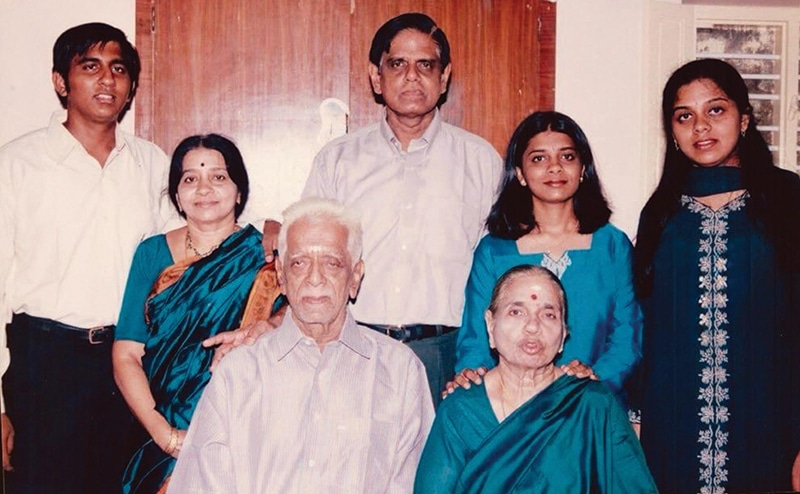
At home, influence came from everyone in the family, including the extended family. Malini’s mother brought kindness, sacrifice, and structure into her life: early mornings, tennis practice before dawn, routines that were followed without fuss, and a home that seemed to run effortlessly because someone was always holding it together. Her father, a scientist and strategic thinker, encouraged problem-solving and systems-level thinking. More importantly, he noticed something in her long before she noticed it herself. “He could tell I was good at bringing people together,” she recalls. “He told me early on that I would be a leader.” Her grandfather, who had turned completely blind in his 60s, lived with the family for a period of time and taught her the values of persistence and making the best of situations. Her grandmother taught her empathy, warmth, and the importance of celebrating the smaller things.
Years later, during a conversation about leadership, Malini’s thoughts returned naturally to her mother. She describes her as deeply organised, the kind of person who woke before everyone else, made sure every detail was taken care of, and quietly kept life moving. “My mother was a role model. I got my organisational skills from her and learned the values of planning and execution. Direction is as important as your team seeing you in action,” she says.
Then, almost overnight, everything changed. When her mother passed away, Malini found herself navigating new responsibilities. Until then, she had never needed to run a household. “I still remember my first day in the kitchen,” she laughs. “The pressure cooker exploded.” The memory is humorous now, but it marked the beginning of a much deeper lesson. There was no instruction manual, no transition period, and no opportunity to feel fully prepared. So, she learned the same way she would learn many things throughout her life, by doing, stumbling, adapting, and trying again.
If her parents shaped her values, her siblings shaped her character. Malini grew up surrounded by people who, in very different ways, helped make her the leader she is today. Her siblings gave her the balanced impetus she needed. “I’d see my sister studying till 2am and wonder if I could do it, so sustained, and yet creative. And my brother and I did music and tennis together and challenged each other to get better. He was also my biggest cheerleader during tournaments,” she recalls.
When she reflects on her childhood today, she does not see one defining influence, but rather a determination to learn the best from each of them. “I’ve learnt my management skills similarly at work by trying to learn the best from people around,” Malini says.
Sport: From competition to concentration
Sport was a defining part of Malini’s growth. In her teenage years, she played tennis and volleyball competitively. “I can’t think of any week going by without play or exercise even now. It not only taught me consistency and hard work, but also how to compete, collaborate, fail gracefully, and recover,” she says.
The boy she would marry
Some of the most important partnerships in Malini’s life began long before she could have imagined where life would take her. What started as table tennis banter in high school eventually led her to her husband, Prakash. What stands out is not simply how young they were when they met, but the values they built together. Even during their undergraduate years, both were clear that they wanted to establish strong career foundations before making major life decisions.
Looking back, that understanding feels remarkably consistent with the qualities that would later define both their lives: logic, patience, and respect for each other’s ambitions. Those qualities became even more important when her career eventually took the family to Canada. Away from the support systems that many families take for granted, life demanded a different kind of partnership. Parenting, daily responsibilities, and the challenges of building careers in a new environment had to be shared.
“He is very supportive and is always pushing me to grow, and I try to reciprocate. Balance has been our mantra while keeping the peace at home,” she says.
No clear plan, just forward movement
After completing her studies, Malini entered unfamiliar territory. Her transition into her first role at National Semiconductor was far more difficult than she had anticipated. “I did not feel equipped,” she recalls. The confidence she had built through years of academic and extracurricular rigour suddenly felt fragile. Chip design, tools, systems, and even basics like Unix were unfamiliar, and she worried about coping. It was more than a technical challenge; it was an identity shift.
Rather than hiding her struggles, she did something that would become a recurring pattern in her life: she asked for help. Her professor, TJR, had a solution: “Teach my students VLSI design.” What began as an act of survival soon became a revelation. Her days settled into a rhythm of studying, teaching, and learning all over again. “The students liked me and my teaching style and professors would chide me, assuming I was a student walking around the corridors during class hours,” she says. Looking back, she realised she was not simply building her technical foundation; she was discovering how she learned best: by stepping into uncertainty and growing through it with others. In parallel, having already stepped into significant family responsibilities soon after her mother’s passing, she learned to balance and multitask. Those experiences quietly reshaped the way she thought about both success and leadership.
As a first-time leader, she stepped into a team where many of the engineers knew technically more than she did. Once again, she faced a question she could not answer through expertise alone: How do I add value? Until then, much of her life had been spent asking whether she knew enough. Leadership required a different question: How can I support and build trust with the team? That shift in perspective moved her focus away from proving herself and towards enabling others. In many ways, the leader she became was forged during those years, through learning how to navigate uncertainty, carry responsibility, and help people succeed even when she herself was still figuring things out.
Leadership through awareness