




How can an orbital laboratory meet its growing electricity needs? A resupply mission is delivering the final pair of roll-out solar arrays to strengthen the International Space Station’s power infrastructure.
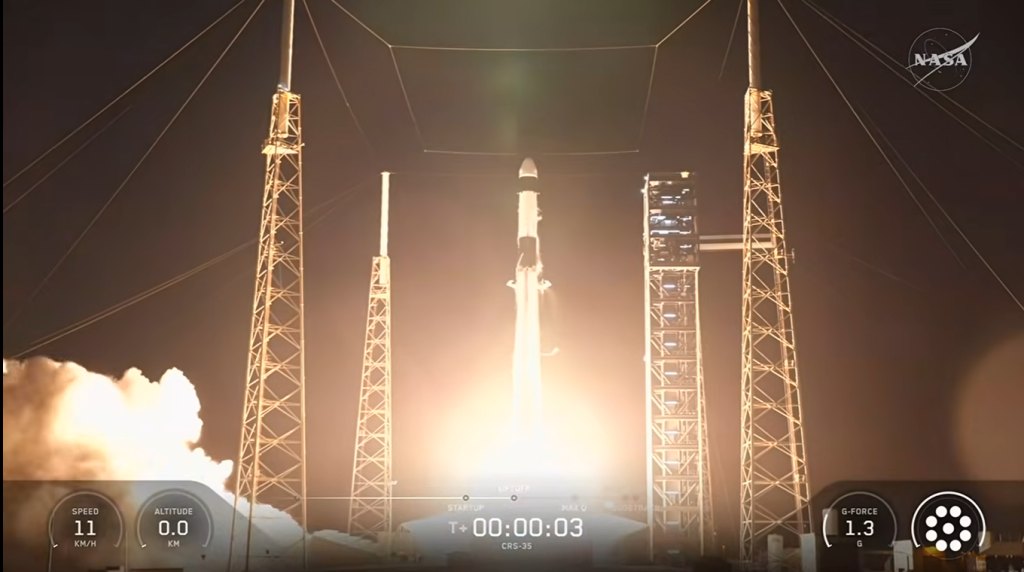
NASA’s 35th commercial resupply mission with SpaceX launched on 13 October 2026, carrying more than 6,300 pounds of cargo to the International Space Station (ISS). Among the payload is the fourth and final pair of International Space Station Roll-Out Solar Arrays (iROSAs), completing a planned upgrade to the station’s electrical power system.
The additional arrays will increase the electricity available for research and station operations, while supporting its eventual safe, controlled deorbit. Each array is designed to generate more than 20kW of power for over 10 years, helping the orbital laboratory meet its long-term energy needs.
What makes the technology interesting is how it delivers a large power-generating surface without taking up excessive space during launch. Unlike conventional rigid solar panels, iROSAs can be compactly stowed and unfurled once in orbit. Their flexible photovoltaic blankets are supported by composite booms that use stored strain energy to deploy the structure without motors.
The arrays will be installed in front of the station’s existing solar panels and integrated with its established electrical infrastructure. This allows the ISS to increase power generation while retaining its existing systems for solar tracking and power distribution, rather than replacing the entire installation.
Astronauts are expected to install the arrays during spacewalks later this autumn. The Dragon spacecraft is scheduled to dock autonomously with the station’s Harmony module on 15 October and remain there until mid-November.
Beyond the ISS, deployable solar arrays could support commercial satellites and deep-space exploration missions, including future lunar infrastructure, where generating reliable power within tight launch-space constraints remains a key engineering challenge.
