




Can an autonomous robot simplify lake-cleaning operations? A water-cleaning system can now collect up to 25kg of floating waste per run.
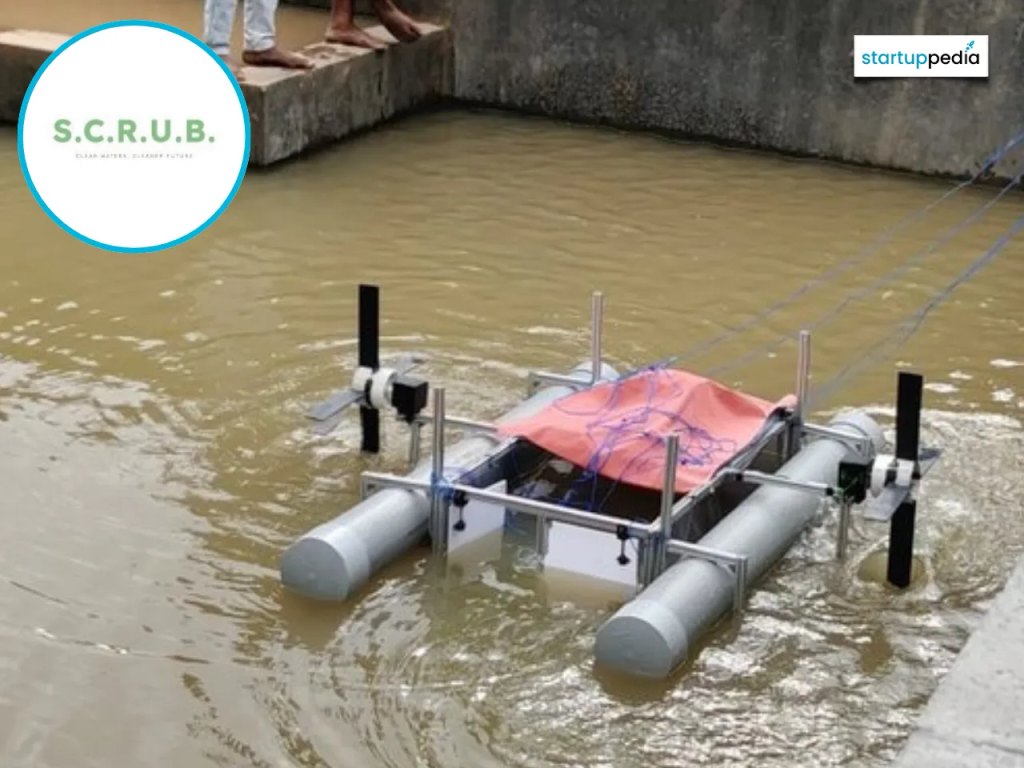
Scrub Robotics has developed and tested SCRUB V2, an autonomous water-cleaning robot designed to collect floating waste from lakes and other water bodies. The system can carry up to 25kg of waste, operate within a stated range of 500 metres and run for up to five hours, potentially reducing the need for continuous manual control during surface-cleaning operations.
The robot is designed to navigate across the water while gathering discarded items such as plastic bottles and packaging materials. Its autonomous operation could help teams cover water surfaces more consistently, although further field testing will be needed to establish performance under different conditions.
SCRUB V2 uses a collection mechanism that opens as the robot moves forward, allowing floating waste to enter through an opening at the front. When the robot reverses, the opening closes to help keep the collected material inside. This approach differs from conventional conveyor-based collection systems.
The platform builds on the team’s earlier SCRUB V1, which was tested at Kengeri Lake in Bengaluru in coordination with the Bruhat Bengaluru Mahanagara Palike (BBMP). The trial provided an opportunity to evaluate the waste-collection approach in a real lake environment and inform further development.
Beyond lake cleaning, Scrub Robotics is exploring systems to intercept floating waste in rivers and canals, where debris can travel with water currents. The team is also investigating water-quality monitoring to gather information about the condition of water bodies.
Further trials and deployments will help determine how well the robot handles varying waste loads and water conditions, and whether its autonomous collection mechanism can be adapted for wider use.
Click here for the official announcement.
