
A chip lets buzzers play voice messages, melodies, and sounds, helping users understand alerts, warnings, and device status.
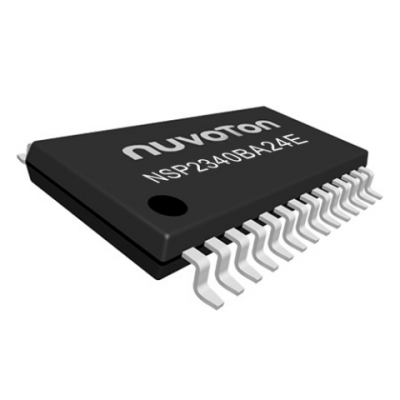
Nuvoton Technology’s NSP2340BA24E smart buzzer is an integrated circuit (IC) that enables conventional piezo buzzers to play voice messages, melodies, and sound effects instead of simple beeps. It combines audio storage, buzzer driving, voltage boosting, and amplification in a single IC for use in home appliances, security systems, healthcare devices, industrial equipment, and other smart applications.
The IC supports a booster output of up to 24V and provides UART, I²C, and Two-Wire interfaces for control by a host microcontroller unit (MCU). It also supports In-System Programming (ISP), allowing audio content to be updated through the host MCU. These features enable developers to customise voice messages and sound effects for different products and application requirements.
The smart buzzer integrates embedded Flash memory, a buzzer driver, a voltage booster, and a Class-AB amplifier. This configuration allows the IC to drive a piezo buzzer directly for voice and sound-effect playback, expanding its role from a component that produces simple alerts to an audio interface that communicates device information.
Conventional buzzers are widely used in electronic products because of their simple architecture and established reliability. They provide audible alerts and feedback about device operation, but beep patterns alone may not communicate information clearly as smart devices become more sophisticated.
The smart buzzer allows products to use voice messages and different sounds to communicate operating status, notifications, and warnings. Instead of requiring users to interpret different beep patterns, devices can provide more recognisable audio feedback to help users understand their status. Developers can build on familiar piezo buzzer designs while introducing different audio features to distinguish their products and improve user interaction.
In home appliances, the IC can provide operation and completion notifications. In security systems, it can deliver warning alerts, while in industrial equipment, it can communicate operating status. It can also be used in healthcare devices and other smart applications that require audible feedback or status notifications.
Click here for the original announcement.