
A modular power bank uses six replaceable lithium-ion cells, allowing users to renew its battery capacity without discarding the entire device.
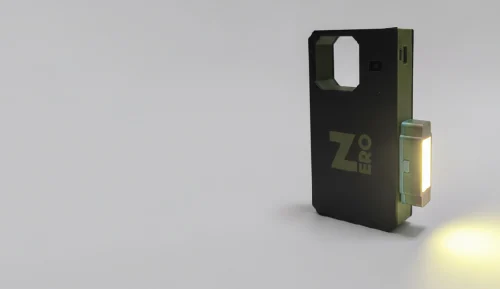
Most power banks become difficult to use once their batteries lose capacity, often requiring the entire device to be replaced even when its charging electronics and ports remain functional. French energy-storage company CTRL ENERGY aims to address this problem with ZERO, a modular power bank designed around user-replaceable lithium-ion cells, repairable components and magnetic accessories.
ZERO uses six standard 18650 lithium-ion cells rated at 3,500mAh each. The cells are arranged in a three-series, two-parallel configuration, giving the pack a nominal voltage of approximately 11.1V and an energy capacity of 77.4Wh. Expressed at the 3.7V reference commonly used for power banks, this is equivalent to approximately 21,000mAh.
The cells are neither soldered nor glued into the enclosure. Instead, the lid is held in place by magnets, allowing users to open the unit without tools and remove the cells using a pull tab. CTRL ENERGY recommends replacing all six cells together with the same validated model, listing compatible options from Samsung, LG and Molicel. Mixing old and new cells or using unverified replacements can affect performance and safety.
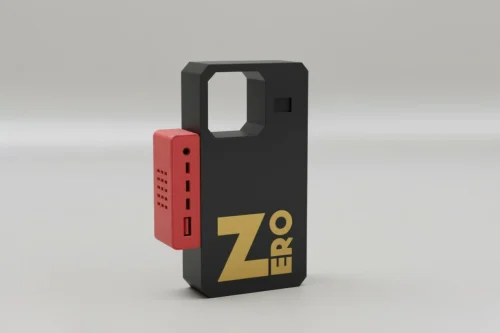
The power bank supports USB-C Power Delivery at up to 100W for charging devices and replenishing its own battery. A USB-A port provides up to 18W, while magnetic wireless charging supports Qi devices at up to 15W. This allows the unit to power smartphones, tablets, cameras and compatible laptops.
Its modular design extends beyond the battery. A magnetic side interface accommodates accessories, including additional output ports, lighting and tripod-related attachments. With a dedicated connector, users can link up to five ZERO units to increase available energy capacity. The company also offers SubZERO, a smaller companion device built around a replaceable 5,000mAh 21700 lithium-ion cell, with USB-C charging rated at up to 20W.
The enclosure is manufactured using 3D printing with recycled ABS, according to the company. However, the main enclosure is not intended to be printed by users. CTRL ENERGY has begun publishing selected accessory files, including a cable winder and stand, under the Creative Commons Attribution-ShareAlike 4.0 licence. It plans to release additional accessory designs, repair guides and documentation for the magnetic interface. The electronics, firmware and files required for manufacturing are not currently published, so the complete power bank should not be described as open-source hardware.
The company says the device includes a battery management system that monitors the cells and protects against overcharging, over-discharge, overcurrent, short circuits and excessive temperature. Planned certification and testing include CE marking, RoHS and UN 38.3 transport testing. These remain important milestones before commercial delivery, and the final specifications and certifications are yet to be confirmed.
The campaign lists an early-bird price of US$89 for ZERO, compared with an expected retail price of US$128. SubZERO is offered at US$39 against an expected retail price of US$56. These prices are crowdfunding offers rather than confirmed retail prices. The company targets first deliveries for June 2027, following certification testing and the planned start of production. As with other crowdfunded hardware, the schedule and final product specifications could change before shipping.
For Indian consumers and electronics makers, ZERO highlights an alternative to replacing an entire power bank when its cells deteriorate. However, replaceable lithium-ion cells must be handled carefully: users should select compatible, verified cells and follow the manufacturer’s replacement instructions. Import costs, shipping arrangements and applicable certification requirements will also affect its availability in India. The design could provide a useful reference for Indian manufacturers exploring repairable portable electronics, particularly products that make batteries and other wear-prone components replaceable rather than treating the complete device as disposable.
For more information, click here.