





Software simulates attacks on naval ships, analyses damage to electrical and critical systems, and assesses their ability to maintain essential functions.
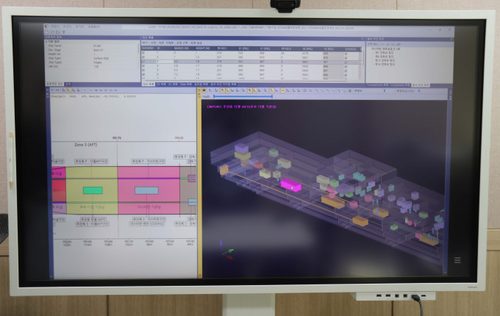
A Korean research institute has developed an integrated software framework to assess naval ship survivability by analysing how vessels can avoid attacks, withstand damage, restore essential functions, and continue their missions. The framework combines analyses previously performed using separate software tools into a single environment, including assessments involving shipboard electrical systems and radar and infrared signatures.
Ship survivability has three elements: susceptibility, which concerns a vessel’s ability to avoid detection and attacks; vulnerability, which determines its ability to withstand damage; and recoverability, which concerns its ability to restore essential functions after damage. These elements have traditionally been assessed using separate tools and procedures, often relying on foreign software.
Developed by the AX Convergence Research Centre of the Virtual Engineering Platform Research Division at the Korea Institute of Machinery and Materials (KIMM), the framework, called isSAFE, generates weapon-hit scenarios using omnidirectional uniform distributions, probability-based distributions, radar cross section (RCS), and infrared (IR) signatures. These capabilities are relevant to the assessment of radar visibility and infrared signatures under different threat scenarios. The software supports simplified and detailed vulnerability analyses for surface ships and simplified analyses for underwater threats.
The framework can model a ship’s compartments, equipment, crew, and mission-critical systems, including electrical power, propulsion, and firefighting. It analyses damage under different threat and impact scenarios to assess whether essential functions can be maintained. This can help engineers examine how damage to electrical power systems and other critical shipboard infrastructure could affect mission performance and compare survivability across different ship configurations.
The framework is expected to support the Republic of Korea Navy (ROK Navy), shipyards, and other end users in ship design and survivability assessments.
Future development plans include improving interoperability with external analysis tools, expanding databases covering threats, equipment, systems, and materials, and developing software for applications such as conceptual ship design and training.
