




What if a sound came from the exact spot where an object appears on screen? A display technology uses AI and panel vibrations to align sound with moving visuals.
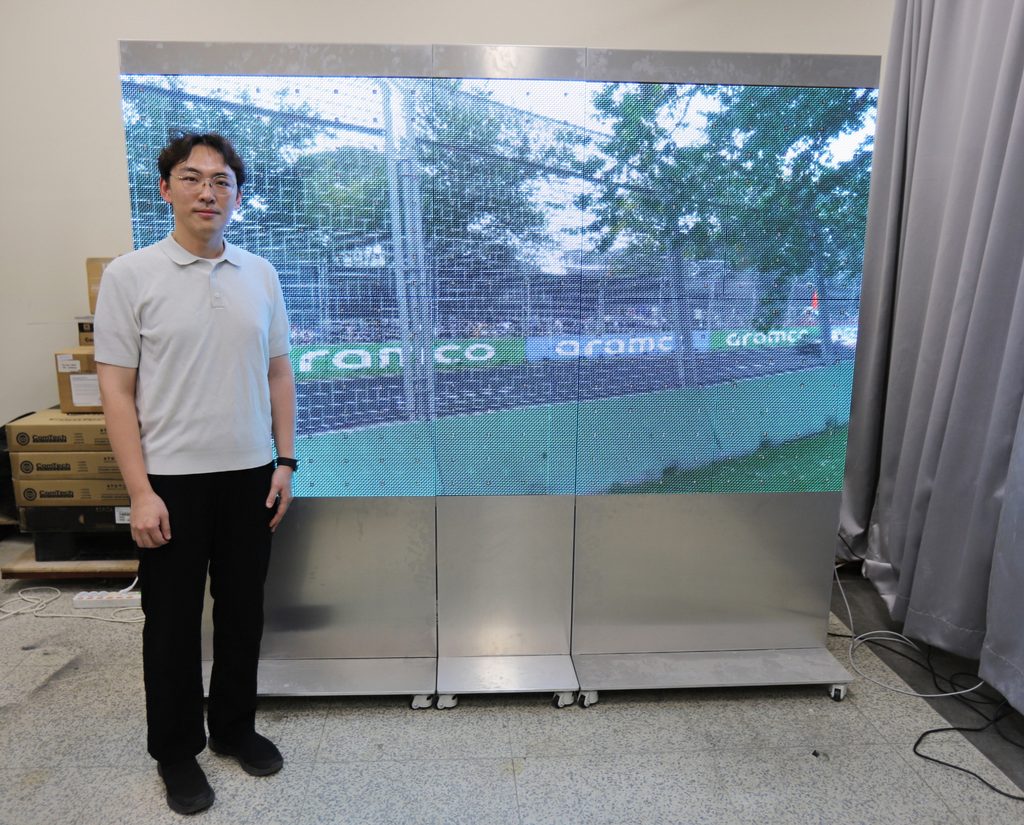
Researchers at the Korea Institute of Machinery and Materials (KIMM) have developed a display technology that reproduces sound from specific screen locations without separate speakers. The system uses controlled panel vibrations and artificial intelligence (AI) to make sound appear to follow people or objects as they move across a display.
The technology could improve audiovisual immersion in large LED displays, digital signage, exhibitions and vehicle displays by aligning the apparent direction of sound with its visual source. Its modular design also allows multiple display units to be combined for larger screens, extending its potential use from televisions to exhibition installations.
The system controls 80 voice coil motor (VCM) actuators mounted behind a display panel. By calculating the voltage signals required for each actuator, it selectively vibrates specific areas of the panel while limiting vibrations elsewhere. Performance tests demonstrated 99.9% accuracy in selecting designated sound-emitting zones, with vibration amplitudes differing by up to 35 decibels between activated and inactive areas.
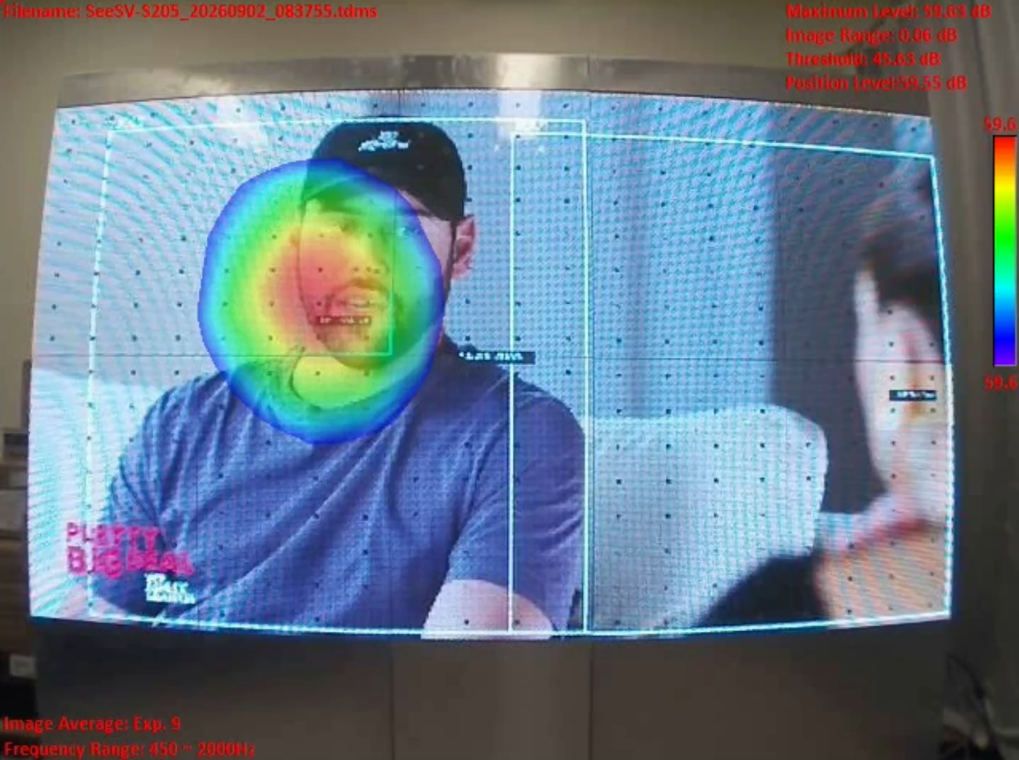
To track moving sound sources, the researchers integrated AI-based sound separation and localisation. The system identifies sound sources in video, separates selected sounds from audio containing multiple sources and reproduces them from the corresponding screen locations in real time. Algorithms designed to improve actuator selection and connect successive acoustic signals also help reduce computational instability, interruptions and unwanted noise.
The team built an approximately 100-inch prototype using a transparent LED display film, an aluminium panel and 80 actuators. Acoustic-camera tests confirmed that sound originated from intended screen locations and moved in response to the visual source.
“The modular-grid technology aligns the position of a sound source on the screen with the direction from which the actual sound is heard,” says Dr Dongjoon Kim, Senior Researcher at KIMM’s AX Convergence Research Center.
The research team has obtained a Korean patent for its modular acoustic radiation system and plans to extend the technology to modular LED displays.
