

Espressif’s ESP32-based ESP-Mosaico kit uses AI coding tools to turn natural-language requests into working applications.
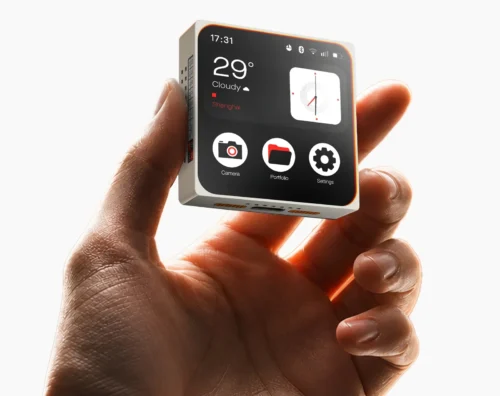
Building an embedded project typically requires programming skills, a development environment and time spent debugging code. Espressif’s ESP-Mosaico aims to simplify this process by allowing users to describe what they want in natural language and use artificial intelligence (AI) tools to generate applications for the device. Projects can range from reminders and weather displays to simple interactive games.
The platform combines a Core Unit built around the ESP32-S31 with a touchscreen, audio interfaces and support for add-on modules. It offers two development approaches: Chat Coding, which generates small applications from voice or text requests, and Vibe Coding, which uses an AI coding assistant on a computer to develop, deploy and test applications on the hardware.
The Core Unit features a 2.16-inch AMOLED touchscreen with a resolution of 480 × 480 pixels. Its hardware includes a speaker, microphone, six-axis motion sensor and two magnetometers. Wi-Fi and Bluetooth connectivity support communication, while magnetic connections and side-mounted headers allow compatible modules to be attached.
Chat Coding is powered by ESP-Claw, Espressif’s AI agent framework. When a user submits a request, the system uses cloud-based speech recognition and a large language model to interpret the instruction and generate a software skill for the device. For example, a user could request a reminder every 30 minutes, a weather display or an animated graphic on the screen. Generated skills can be saved and reused, allowing projects to be refined through further instructions.
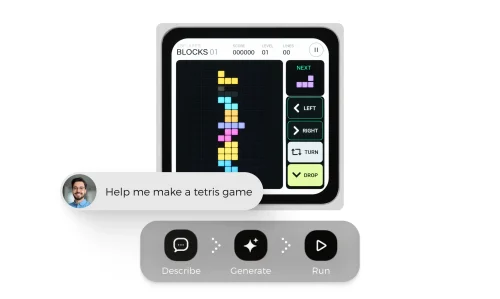
This approach relies on internet connectivity and cloud AI services rather than processing the entire request locally. Users can configure AI model credentials through the device’s settings and web interface, subject to the supported providers and available service quotas.
Vibe Coding offers a different workflow for more involved projects. Instead of generating a small skill directly through the device interface, users connect the Core Unit to a computer over USB-C and use a compatible AI coding agent to develop an application. Espressif lists tools including Codex, Claude Code, OpenCode and Trae for this workflow. Developers can ask an agent to create a project, review its implementation and test the interface in an emulator before flashing the application onto the board.
The ESP-Mosaico Vision Combo Kit includes the Core Unit, Camera Module and Interaction Module. The camera adds image-capture capabilities, while the Interaction Module provides a light sensor, passive infrared motion sensor, infrared LED and six RGB LEDs. These components can support projects that respond to environmental conditions, detect movement or provide visual feedback. The camera module must be installed on the designated header and should not be removed while the device is powered on.
The platform’s open-source software provides another route for developers who want to examine or modify its implementation. ESP-Claw is available on GitHub, while Espressif also provides a separate repository for Vibe Coding examples and publicly available enclosure files. Developers should check the individual repositories for their licences, dependencies and redistribution conditions before incorporating the code into other projects.
There are practical limitations. Chat Coding depends on Wi-Fi, cloud speech-recognition services and an AI model, while Vibe Coding requires a computer, a compatible coding agent and familiarity with its development workflow. Espressif’s documentation includes instructions for configuring the device, installing the relevant software and updating its firmware. Actual response times, application reliability and battery life will depend on the selected services, software and operating conditions.
For Indian students, educators and electronics hobbyists, ESP-Mosaico offers a way to experiment with AI-assisted embedded development without beginning every project by writing code from scratch. It could support classroom demonstrations, interactive displays and simple connected devices, although its suitability for larger deployments will depend on the landed cost, service availability and the reliability of its cloud-dependent features.
For more information, click here.