

AI-powered wearables are evolving beyond fitness tracking into personal assistants capable of managing daily tasks, analysing conversations and offering personalised guidance, intensifying concerns over data privacy.
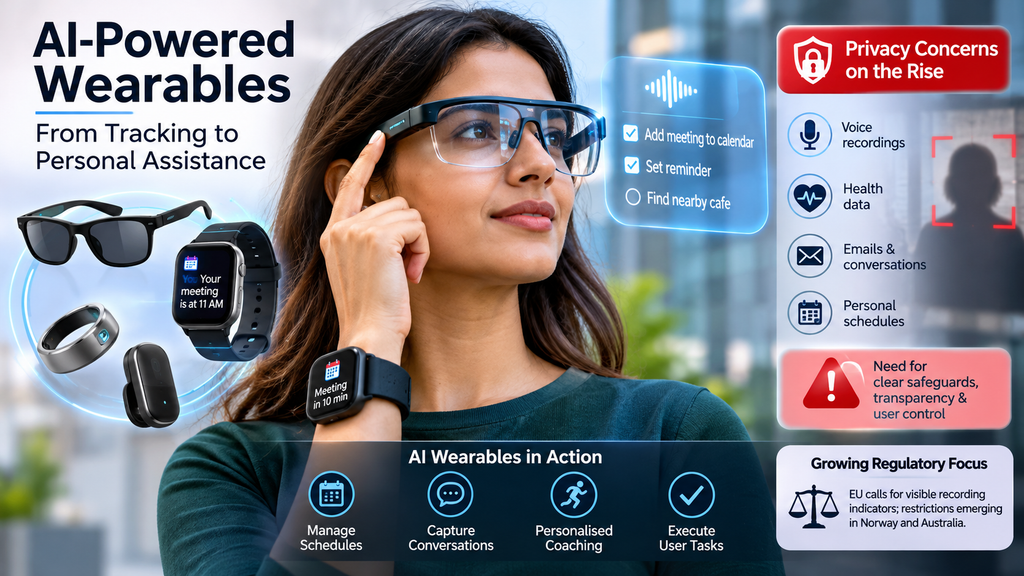
Artificial intelligence is revolutionizing wearable electronics from mere personal trackers to intelligent helpers that can do daily jobs. Smart glasses, rings, watches, and clip-on devices are now incorporating artificial intelligence technology to help users in managing their schedule, recording conversations, offering personalized coaching, and executing commands. But with increased availability of personal data, privacy issues are growing, according to an article published by GlobalData.
The article, entitled AI is Moving Wearables from Personal Tracking to Personal Assistance, Raising the Stakes for Privacy, reveals how integration of AI technology has changed the way body-worn devices work. In contrast to the existing wearables that simply track fitness activities, sleep patterns, and health parameters, new devices can interact with digital services and do jobs for users.
Firms such as Apple, Google, and Samsung are increasing their use of AI assistants in smartphones, smartwatches, and earbuds. Meta is creating a comprehensive personalized AI system through its smart glasses via Muse, its personal AI assistant. On the other hand, Oura and WHOOP are concentrating on the AI-enabled health information and personal insights.
Also, AI first devices are being released. For example, Amazon’s Bee is a device which can be clipped on or worn on the wrist that records conversations and turns the information into reminders to organize activities. AI first devices highlight how microphones, applications and AI processing technology can lead to hands-free digital assistance.
Nevertheless, these features need access to sensitive information such as voice recordings, health information, emails, calendars, and private conversations. Smart glasses increase the privacy risks since nearby people can be recorded unknowingly. Recording indicator of smart glasses of Meta has been made more secure following customers’ complaints.
Increased regulation is another trend in development. The European Data Protection Board issued recommendations in October for highly visible recording indicators and warned that device makers cannot delegate their privacy obligations to their users. Bans are also coming in places like Norway and Australia. The more capabilities that become available with AI through wearables, the harder this balance becomes.