

Quantum computing demands more than quantum processors that are powerful. Integration of CPUs, GPUs, adaptive SoCs, and open-source software with quantum computers would help improve error corrections, scientific computing, and fault tolerant architectures.
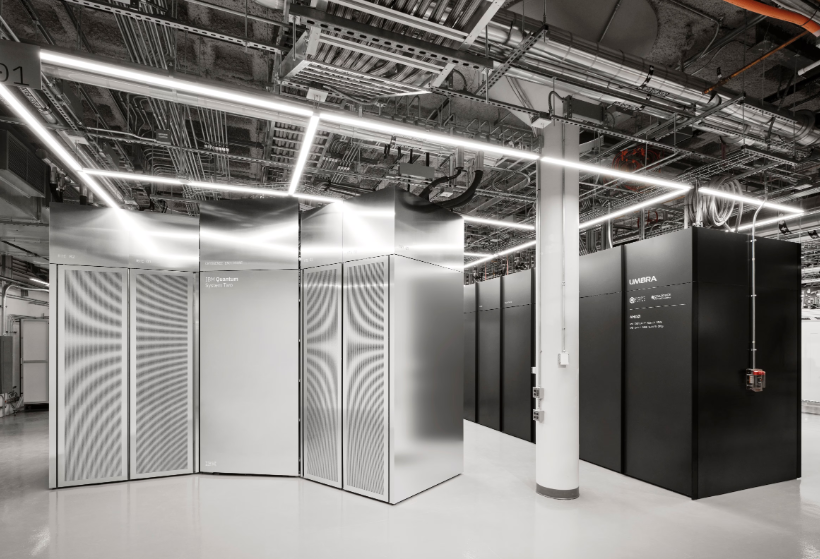
Development of quantum computers demands more from classical computers in terms of handling computational loads, accelerating simulations, and solving computational errors. In order to meet these demands, AMD is collaborating with IBM and Oak Ridge National Laboratory (ORNL) to design a hybrid quantum-classical computing architecture aimed at quantum error correction and system integration.

This partnership is based on a code-signing platform developed by IBM and Quantum Science Center of Oak Ridge National Laboratory. This platform combines quantum processors and HPC facilities in one place to assess architectures of hardware, software, and workflow for the future quantum computers.
In this initial implementation, the connection is between the IBM quantum computers with IBM Quantum Nighthawk – 120 qubits – and the ORNL Umbra HPC. The latter one is equipped with the fifth generation of AMD’s EPYC CPUs and Instinct MI355X GPUs. Thus, this configuration will offer classical computing resources for conducting research into quantum error correction, decoding optimisation and software orchestration.
The architecture solves the issue of having various processing needs in the hybrid computing setting. While AMD EPYC CPUs perform general computing and manage workloads in both quantum and classical systems, the Instinct GPUs speed up simulations, optimisations and parallel computations. Finally, AMD Versal adaptive SoCs allow for having fast control, processor readout and error decoding in proximity to quantum hardware.

The AMD ROCm open software ecosystem becomes another solution for establishing the link between the HPC and AI applications and the hardware discussed above. Quantum error correction is one of the significant challenges in this regard as quantum information can be corrupted by noise and computation errors. Decoding the error data needs significant classical computation power along with the quantum processor. The common platform would help in exploring such needs under the Quantum Genesis Mission initiative from the US Department of Energy towards achieving quantum computing with scientific relevance by 2028. In the future, the platform would be connected to the Leadership Computing Facility at Oak Ridge National Laboratory.