Build RF mesh networks with multi-hop range, lower cost, and reliable links—this design shows how engineers can scale smart metering and wireless systems.
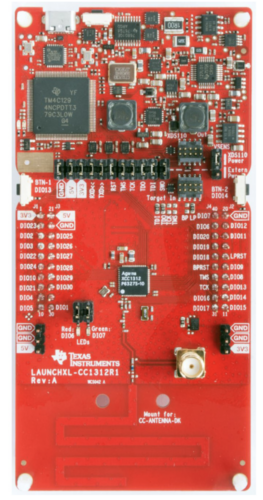
The reference design from Texas Instruments (TI) implements a low-power RF mesh network end node with Datagram Transport Layer Security (DTLS) for smart meter Advanced Metering Infrastructure (AMI) networks. It runs an IPv6-based 6LoWPAN stack on a single SimpleLink wireless MCU, reducing system cost while supporting secure communication. The design is suited for wireless communication systems, including electricity, water, and gas metering.
At a system level, engineers can use this design to develop smart metering nodes for electricity, water, and gas networks, or extend it to other wireless sensing applications. The built-in 6LoWPAN mesh capability allows devices to communicate over multiple hops, which is useful in deployments where direct communication with a gateway is not always possible. This helps reduce infrastructure cost by lowering the number of data concentrators required, while still maintaining network coverage across large areas.
The design also helps engineers handle real-world RF challenges. It includes frequency hopping (FH), which improves reliability in environments with interference. By switching channels using a shared pseudo-random sequence, devices can maintain stable communication even in crowded spectrum conditions. This is useful in urban deployments or industrial sites where multiple wireless systems operate in the same band. Engineers can use this feature to improve network robustness without adding external RF complexity.
Another practical advantage is the ability to scale networks. The design supports larger neighbor and routing tables compared to earlier implementations, allowing more devices to be connected within the same mesh. This makes it suitable for dense deployments, such as large residential metering systems or distributed sensor networks. Engineers can focus on application-level development while relying on the reference design for network handling and routing.

The platform runs UDP applications over a 6LoWPAN stack and uses a sub-1 GHz RF interface, supporting multiple data rates and long-range communication. This allows engineers to balance range, data rate, and power consumption based on application needs. For example, lower data rates can be used for long-distance communication in rural deployments, while higher data rates can support faster updates in compact networks.
From a hardware perspective, the design simplifies power and system integration decisions. It supports operation with standard voltage levels and allows engineers to choose suitable power conversion stages based on their end equipment. In setups powered through USB or higher input voltages, a regulator stage is used to step down to the required level. Tools like TI WEBENCH Power Designer can help engineers quickly design and validate the power supply section based on load and efficiency requirements.
TI has tested this reference design. It comes with a bill of materials (BOM), schematics, assembly drawing, printed circuit board (PCB) layout, and more. The company’s website has additional data about the reference design. To read more about this reference design, click here.