

A wireless audio reference design combines digital signal processing, surround-sound algorithms and 2.4 GHz radio technology to help engineers develop low-latency audio systems for headphones, home entertainment and multiroom applications.
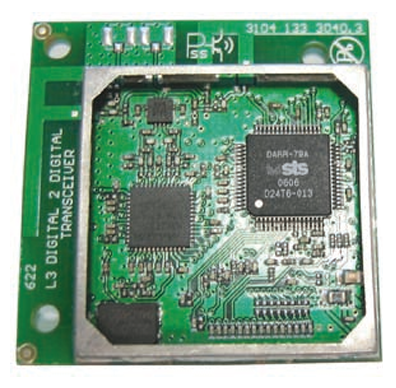
NXP’s linked fact sheet describes the DH3 wireless Dolby Headphone reference design, originally developed by Freescale Semiconductor in collaboration with Sound and Telemetry Solutions (STS). The design builds on the earlier DH1 platform by integrating a 2.4 GHz wireless audio link, enabling manufacturers to develop surround-sound products without requiring a physical connection between the audio source and headphones. It targets consumer audio equipment, including game consoles and DVD players, while providing a foundation for wireless stereo and multichannel audio applications.
The design centres on the Symphony DSP56371 digital signal processor (DSP), which handles audio decoding and processing. It accepts optical Sony/Philips Digital Interface Format (S/PDIF) inputs carrying Dolby Digital, Digital Theater Systems (DTS) or pulse-code modulation (PCM) audio, as well as analogue audio inputs. The processor decodes supported digital streams and applies Dolby Headphone processing to produce a virtualised stereo signal that recreates a surround-sound listening experience over conventional headphones. For stereo sources, it can also use Dolby Pro Logic II processing to expand two-channel audio to 5.1-channel surround sound before virtualisation. The processed output is then sent to the STS DWAM79 wireless module for transmission to compatible wireless headphones.
The DSP integrates audio-processing capabilities and software functions that help reduce the need for additional control hardware. Supported functions include Dolby Digital and DTS decoding, Dolby Pro Logic II post-processing, Dolby Headphone processing and DTS Neo:6 post-processing. Equalisation, compression, tone control, fade and balance adjustment, signal generation and audio-level monitoring are also supported. The reference design measures approximately 3 × 3 inches, excluding the additional wireless module, making it a useful starting point for engineers evaluating compact audio-processing architectures. Its block diagram also identifies an integrated S/PDIF transceiver, an external analogue-to-digital converter, serial interfaces, memory and power-regulation circuitry.
A related STS digital wireless audio platform described in the fact sheet uses the DARR79/80 audio baseband chip alongside a standard 802.11 radio front end operating in the 2.4 GHz industrial, scientific and medical (ISM) band. It supports up to eight channels of uncompressed 16-bit digital audio at 44.1 kHz or 48 kHz sampling rates, with low latency and interference-management capabilities designed to improve coexistence with Wi-Fi, Bluetooth and other 2.4 GHz devices. The module operates from a single 3.3 V supply and includes radio and antenna hardware. The fact sheet also notes prequalification for Federal Communications Commission (FCC) and European Telecommunications Standards Institute (ETSI) requirements. These details apply to the associated DARR79/80 platform and should not be assumed to be specifications of the DH3 design itself.
For design engineers, the DH3 reference design provides a practical architectural starting point for developing wireless headphone systems, surround-sound accessories, home-theatre equipment and gaming audio products. Engineers can study the signal path from audio input and decoding through spatial audio processing and wireless transmission, helping them understand how DSP software, digital audio interfaces, analogue conversion and radio modules work together. The design is particularly relevant to engineers evaluating audio-processing algorithms, integrating wireless connectivity or planning a dedicated audio accessory without developing every subsystem from scratch. The associated STS platform also offers useful design insights for wireless stereo systems, multichannel audio links and multiroom audio products that require synchronised playback and low transmission delay.
The original fact sheet is a legacy technical document rather than a confirmation of current product availability or a complete, ready-to-manufacture design package. Engineers should verify component availability, software licensing, wireless compliance requirements and compatibility with current audio standards before using the architecture in a new commercial product. For more details, click here.