




Can a dedicated chip make wearable health monitoring more precise and power-efficient? An Indian semiconductor startup has validated its first biomedical sensor chipset in silicon.
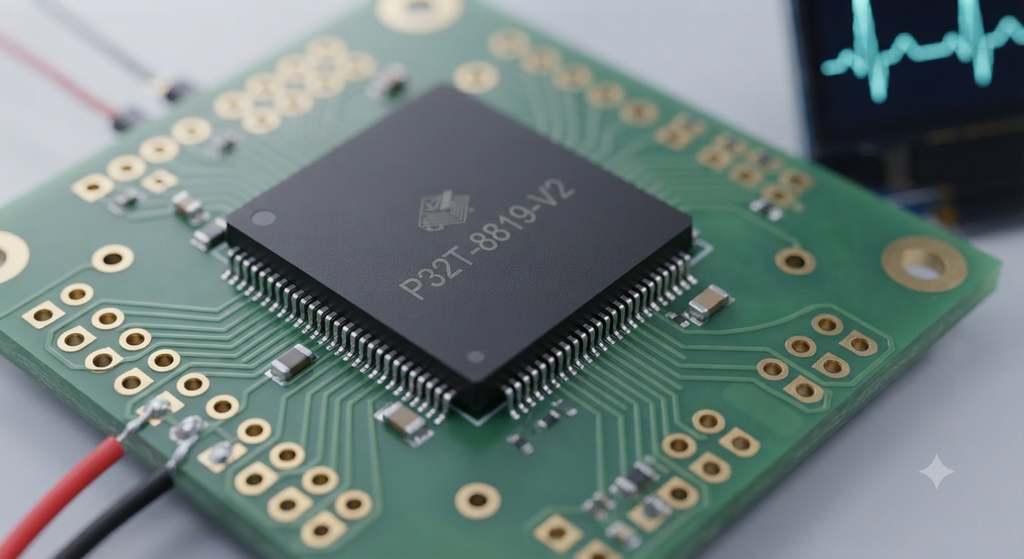
Sophrosyne Technologies, has completed the post-silicon validation of its first biomedical sensor chipset. This includes functionality to both sense and in real time, display an electrocardiogram (ECG) reading – all on the company’s silicon.
The bio-sensing chip incorporates low power analogue circuitry and highly accurate sensors along with in-house intellectual property. It is being developed so that small wearable devices can sense health related data and do so in an energy efficient manner.
Following the company’s silicon tape-out process in late-April 2026 and receipt of silicon, the company has successfully validated the bio-sensing chip. Although it has confirmed that the chip is able to sense and display in real time an ECG reading, it has not provided specific information on its performance, power consumption or the type(s) of health data that have been validated to date.
The purpose-built bio-sensing semiconductor chips can allow wearable device makers to embed sensing functionality in smaller and more energy efficient devices. As opposed to utilising off-the-shelf items, bio-sensing chip sets can be designed to specifically address the needs of health sensing, taking into account the importance of both sensing accuracy and energy efficiency.
The company is currently working on making the bio-sensing chip commercially viable. Within the next 10 months it intends to re-tape-out the chip and initiate proof-of-concept discussions with Indian and global wearable device makers.
The development has also been backed by the Ministry of Electronics and Information Technology (MeitY), the DLI Technical Committee, C-DAC and Bluehill VC. The company is marketing the bio-sensing chip as India’s home-grown semiconductor option for use within the convergence of healthcare, wearables and connectivity.
