





New converter technologies promise higher efficiency, greater power density and improved reliability for next-generation energy systems.
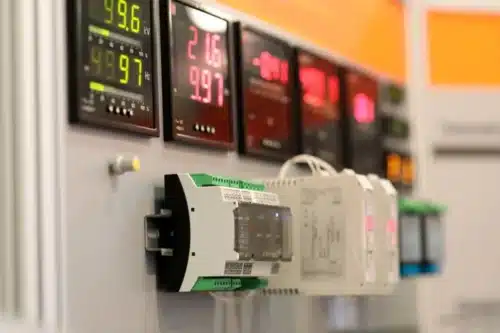
Power electronic converters (PECs) are at the heart of modern energy conversion systems, enabling efficient transfer of electrical power across a wide range of applications, from electric vehicles and renewable energy installations to smart grids, battery energy storage systems and industrial automation. Ongoing advances in semiconductor devices, converter topologies and control strategies are helping designers achieve higher efficiency, improved power density and enhanced reliability while reducing energy losses.
Among the most significant developments are multilevel converters (MLCs), which generate output voltages using multiple voltage levels rather than a conventional two-level waveform. This approach reduces harmonic distortion, lowers switching losses and improves output quality, making MLCs suitable for medium- and high-power applications. Common topologies include neutral-point-clamped (NPC), flying-capacitor, cascaded H-bridge and hybrid multilevel converters. Hybrid designs combine the advantages of different converter architectures to improve voltage balancing, minimise switching stress and increase overall efficiency.
Another major area of innovation is resonant converter technology, particularly LLC resonant converters. These converters achieve soft switching by using the resonant behaviour of inductors and capacitors, significantly reducing switching losses and electromagnetic interference (EMI). Their ability to deliver high efficiency over a wide operating range has made them popular in battery chargers, photovoltaic inverters, power supplies and industrial equipment. Half-bridge, full-bridge and three-level LLC converters are increasingly adopted where electrical isolation, compact size and high efficiency are essential.
Researchers are also exploring advanced boost converter designs, switched-capacitor techniques and coupled-inductor topologies to improve voltage gain without increasing the number of switching devices. At the same time, sophisticated digital control methods, including sliding-mode control and intelligent power management algorithms, are enhancing converter stability and transient response.
Despite these advances, challenges remain in managing EMI, thermal performance and reliability as switching frequencies continue to increase. Nevertheless, continuous improvements in converter design, semiconductor technologies and control techniques are expected to drive the next generation of high-performance, energy-efficient power electronic systems for automotive, industrial and renewable energy applications.
