

Helps you build and test embedded applications using instructions, AI-generated code, and hardware add-ons without writing all the code yourself.
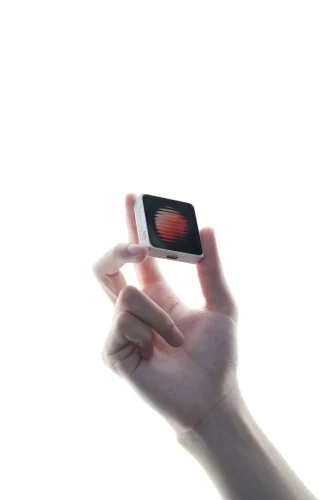
Espressif Systems has introduced ESP-Mosaico, a development device for artificial intelligence of things (AIoT) and embedded applications. It enables users to create and run device functions using natural-language instructions, with an AI agent generating and executing the corresponding code. Users can refine the results through further conversations.
The device targets embedded developers, electronics engineers, students, educators, and makers who want to prototype hardware-based applications, explore AI-assisted programming, or develop interactive devices. It can also be used by software developers who want to build embedded applications without handling every step of the coding process manually.
Through its ChatCoding feature, users can describe tasks using text in WeChat or voice input through the Claw application. For example, they can create screen animations, set recurring reminders, develop automated workflows, schedule tasks, and add device functions. Users can also ask the system to plan projects, such as building a servo-based robot, before implementation. Completed functions can be saved, reused, and modified through its Work interface.
For developers building applications from scratch, ESP-Mosaico supports VibeCoding, which combines an AI coding agent on a computer with an emulator, debugging tools, and the physical device. This workflow can be used to develop and test applications such as games, implement user-interface changes, and refine device behaviour before flashing programs to the hardware.
The device provides a web-based control panel for configuring Wi-Fi, large language model (LLM) services, automatic speech recognition (ASR) services, network application programming interface (API) services, and device settings. Users can configure their own model credentials when required. An Idea Center also provides application ideas and downloadable programs.
ESP-Mosaico supports peripheral expansion boards, including a camera expansion board. Its interfaces include USB-Serial-JTAG, UART, and a CODEC interface that can be used for general-purpose input/output (GPIO) under specified conditions. It provides 5V input, along with 5V and 3.3V outputs rated at up to 100mA each.
The device is intended for developing and experimenting with embedded applications, rather than serving as a general-purpose computing platform. Its AI functions may use third-party services configured by users.
Click here for the original announcement.