

An India-built vision platform combines edge AI and intelligent imaging to improve vehicle identification, traffic monitoring, and electronic tolling across demanding road environments.
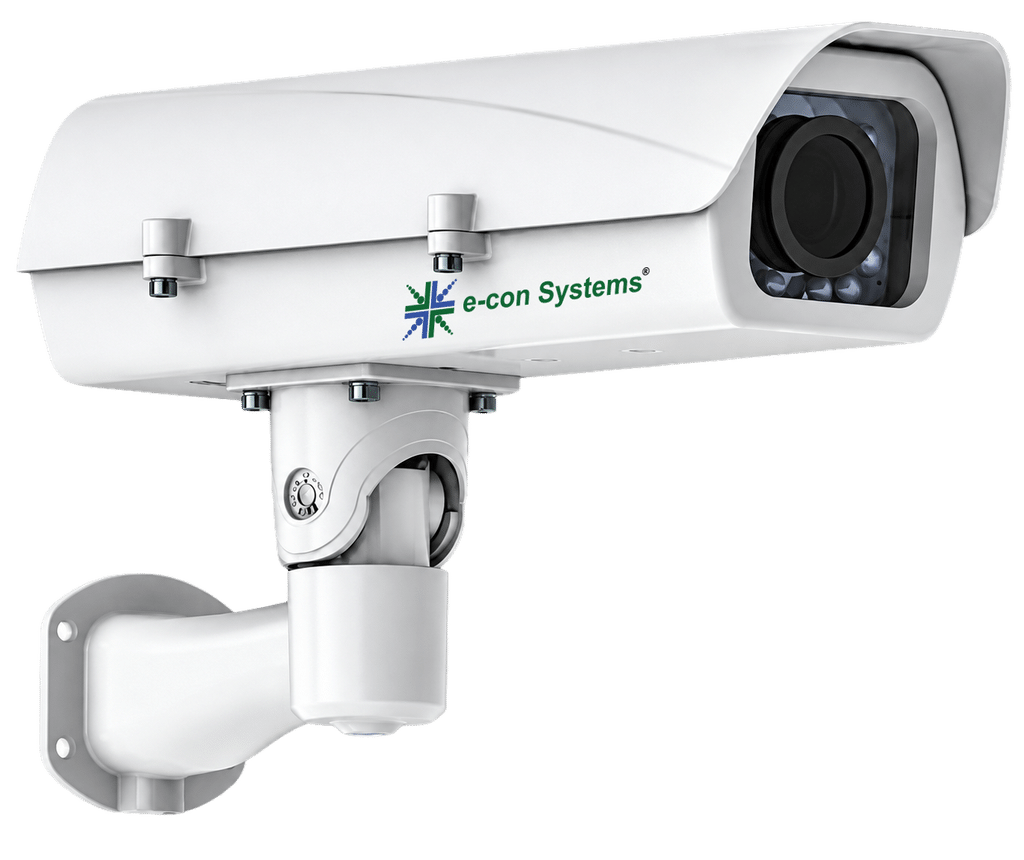
Traffic surveillance systems often have to identify vehicles reliably while operating in busy, fast-moving road environments. Addressing this requirement, e-con Systems’ TrafficSenz is a new AI-powered ANPR camera designed for traffic enforcement, tolling, and intelligent transportation infrastructure. The camera is indigenously designed, developed, and manufactured in India, positioning it for deployments where local sourcing and secure vision infrastructure are important.
TrafficSenz combines imaging and edge AI to perform vehicle and number-plate recognition closer to the point of capture. This can help traffic systems analyse road activity in real time rather than relying entirely on remote processing. The approach is particularly relevant for applications such as Automatic Number Plate Recognition (ANPR), Advanced Traffic Management Systems (ATMS), Multi-Lane Free Flow (MLFF), and Video Incident Detection and Enforcement Systems (VIDES).
The key features are:
- 5MP imaging resolution
- Global-shutter imaging
- IP67-rated enclosure
- IK10 mechanical protection
- Detection range up to 50 m
A key advantage of the camera is its suitability for enforcement environments where conventional vision systems can face challenges. Its imaging architecture is intended to support accurate plate recognition on high-speed and high-traffic corridors. The camera also supports ONVIF, allowing it to integrate with compatible surveillance and traffic-management infrastructure. NDAA compliance further supports deployments requiring defined security and procurement requirements.
TrafficSenz can also connect with CloVis Central, e-con Systems’ cloud-based platform for remote device and evidence management. This provides a route for centralised management of deployed cameras and collected traffic evidence, which can be useful for distributed transportation networks.
The platform reflects an integrated approach to embedded vision, bringing together image sensors, optics, ISP tuning, mechanical design, and AI compute within the development ecosystem. This enables the imaging and AI elements to be developed as a coordinated system rather than as isolated components.
The camera is aimed at road infrastructure operators, traffic enforcement systems, tolling networks, and intelligent transportation deployments seeking locally developed AI-enabled vision technology. Its India-based design and manufacturing also addresses the growing requirement for trusted, indigenous surveillance solutions.