




The rapid scaling of AI workloads is forcing a fundamental rethink of how data moves inside and between data centres, with next-generation optical links emerging as a critical enabler of performance, efficiency, and scalability.
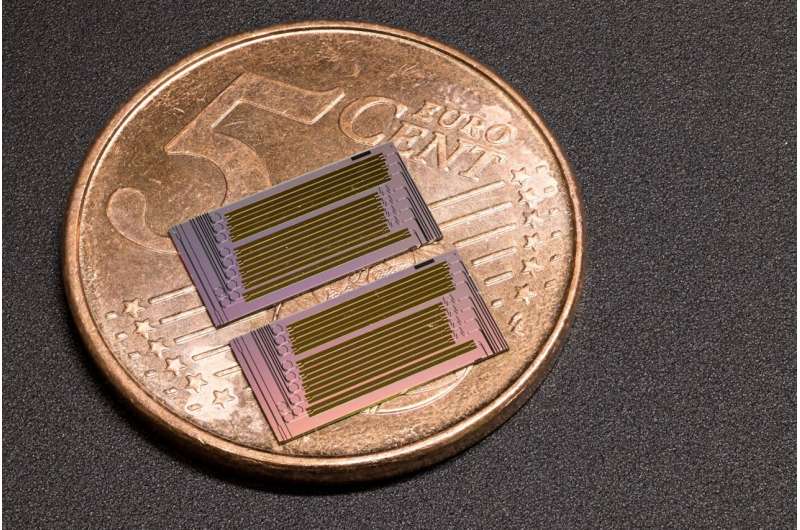
At the core of the shift is the growing limitation of traditional electrical interconnects. As AI clusters expand to thousands or even millions of processors, moving data fast enough has become a bottleneck. Industry efforts are now focused on replacing copper-based links with optical technologies that use light to transmit data, delivering significantly higher bandwidth and lower latency.
Researchers and engineers are exploring advanced photonic solutions to support the massive parallel data flows required for AI training and inference. These include silicon photonics, co-packaged optics, and new fibre designs, all aimed at reducing energy consumption while increasing throughput. Optical interconnects are also better suited to handle the thermal and power constraints that limit conventional electronic links.
A key advantage of these emerging links is their ability to scale efficiently. Instead of relying on a few high-speed channels, newer approaches distribute data across many parallel optical paths, improving reliability and reducing power usage. This architecture is particularly important for hyperscale AI systems, where consistent, low-latency communication between nodes directly impacts overall compute performance.
The industry momentum behind optical networking is accelerating. Major players are investing heavily in photonics supply chains and infrastructure, signalling a broader transition toward optical-first data centre architectures. At the same time, new generations of high-speed switches and optical modules, such as 1.6 Tbps systems, are beginning to enter volume deployment, further supporting this shift.
Beyond performance, energy efficiency is becoming a decisive factor. Optical links can significantly reduce power consumption compared to electrical alternatives, making them essential for sustainable AI infrastructure. As data centres face increasing scrutiny over energy use, these technologies are expected to play a central role in meeting both performance and environmental targets.
Looking ahead, the transition to optical interconnects is not just an incremental upgrade but a structural change in data centre design. As AI continues to drive unprecedented data movement, faster and more efficient links will define the next phase of computing infrastructure.

