




A next-generation server chip built specifically for AI agents promises faster task execution, higher efficiency and tighter CPU-GPU integration, signalling a shift in how future AI infrastructure is designed.
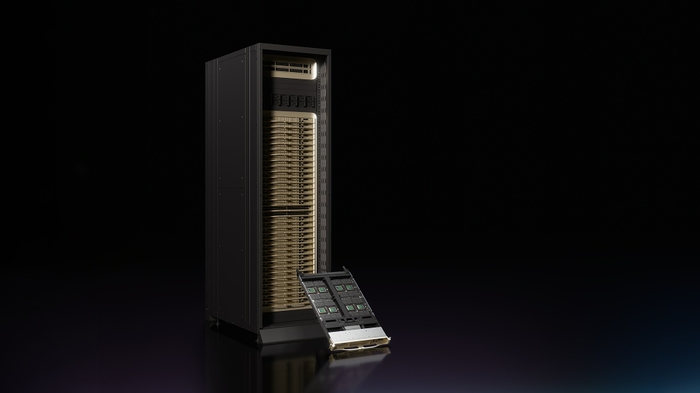
As artificial intelligence moves beyond chatbots and into autonomous software agents, a new generation of data-center processors by NVIDIA is emerging to handle the growing demands of orchestration, reasoning and code execution.
The latest entrant is a server-grade CPU designed specifically for agentic AI workloads, where software systems can plan tasks, call tools, execute code and make decisions with minimal human intervention. The processor marks a departure from traditional general-purpose server chips by focusing on the infrastructure layer that supports AI agents rather than the AI models themselves.
Built around 88 custom-designed cores, the chip is aimed at accelerating workloads such as reinforcement learning, data processing, analytics pipelines and agent execution environments. The architecture includes support for spatial multithreading and a high-bandwidth LPDDR5X memory subsystem capable of delivering up to 1.2TB/s bandwidth, helping reduce bottlenecks in CPU-intensive AI workflows.
The key features are:
- 88 custom CPU cores designed for AI-agent workloads
- Up to 1.2TB/s LPDDR5X memory bandwidth
- Spatial multithreading supporting 176 concurrent threads
- Up to 1.8x faster task completion versus x86 CPUs
- 1.8TB/s CPU-GPU interconnect bandwidth for accelerated AI systems
According to the company, the processor can complete tasks up to 1.8 times faster than conventional x86-based alternatives, while also improving energy efficiency in large-scale deployments. Independent benchmark results published through Phoronix showed the chip outperforming several high-end server processors from AMD and Intel in selected workloads related to software development, databases and scripting environments.
The launch reflects a broader industry shift toward AI infrastructure optimized for autonomous agents, a category expected to generate increasing demand across cloud platforms and enterprise data centers. Several AI labs and cloud providers are already evaluating or planning deployments, including organizations working on large-scale AI training and inference systems.
The processor will also serve as the host CPU for next-generation accelerated computing platforms, using a high-speed interconnect that enables up to 1.8TB/s of coherent bandwidth between CPUs and GPUs. This tighter integration is intended to improve data movement and system responsiveness in AI factories handling large volumes of inference and reasoning workloads.
Systems based on the new processor are expected to become available through server manufacturers and cloud partners later this year.
Click here for the original announcement.

