




New AI software libraries enable developers to automate simulation-ready 3D world creation with GPU-accelerated physics, sensor simulation and asset validation, reducing development time for robotics, digital twins and autonomous systems.
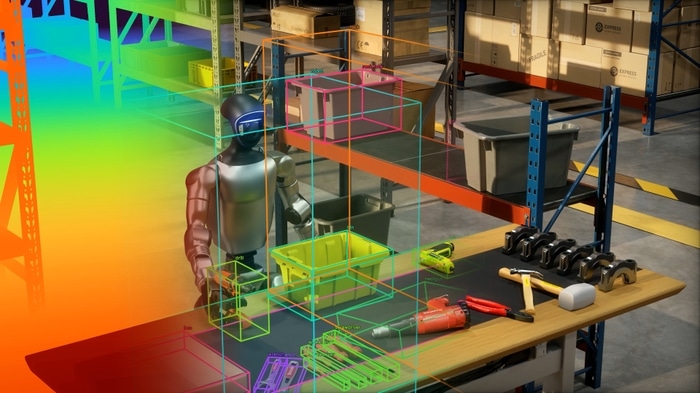
Artificial intelligence is moving beyond code generation to the creation of simulation-ready digital environments. NVIDIA has expanded its Agent Toolkit by integrating Omniverse libraries that allow AI agents to prepare, inspect and validate 3D worlds for physical AI applications. The update enables developers to automate complex simulation workflows required for robotics, industrial automation, autonomous vehicles and digital twins, reducing the manual effort traditionally involved in preparing virtual environments.
The technology equips AI agents with software components that can analyse 3D scenes, identify missing or incorrect attributes, test physics behaviour and ensure assets are ready for simulation. Rather than simply generating 3D content, the agents can now execute engineering-oriented tasks such as workflow creation, scene inspection, issue detection and simulation preparation. This bridges the gap between conventional generative AI and physical AI, where virtual environments must accurately represent real-world behaviour before robots or autonomous systems are deployed.
A major addition is a collection of open Omniverse libraries covering RTX-based sensor simulation, GPU-accelerated physics simulation and SimReady asset validation. RTX sensor simulation enables developers to emulate the behaviour of cameras, LiDAR and other perception sensors, while GPU-accelerated physics models realistic motion, collisions and environmental interactions. SimReady validation automatically checks whether 3D assets contain the geometry, materials, metadata and physical properties required for reliable simulation. The libraries are available through GitHub, allowing integration into existing engineering workflows and third-party applications.
The platform also builds on OpenUSD interoperability, allowing AI agents to organise, convert and exchange 3D scene data across different software tools. This enables engineering teams to preserve existing design workflows while adding simulation capabilities without rebuilding applications from scratch. Sample integrations, including Blender-based workflows, demonstrate how simulation functions can be embedded into widely used 3D design environments.
The technology is expected to benefit developers building industrial digital twins, robotic systems, autonomous machines and smart manufacturing applications. By combining rendering, sensor simulation, physics and automated validation into programmable AI workflows, the toolkit enables engineers to move more quickly from CAD and 3D design data to validated simulation environments. Such simulation-first development can improve system verification, accelerate software testing and reduce the cost of deploying physical AI systems into real-world operations.


