What if the same autonomous robot could inspect a site, move supplies, monitor infrastructure, and adapt to new tasks? A modular platform is built around that idea.
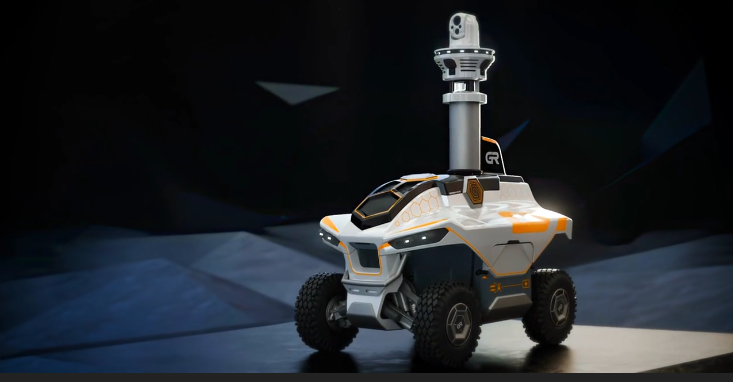
GENERATIVE Robotics has developed the GR-01, a modular autonomous mobile robot designed to take on different tasks by changing its sensors, payloads, and configuration. Developed in Germany, the four-wheel platform is intended for environments ranging from industrial sites and critical infrastructure to healthcare and intralogistics.
Rather than building the robot around a single application, the platform separates mobility and autonomy from the equipment required for a particular mission. Its interchangeable payload architecture can accommodate cameras, radar, microphones, gas detectors, transport modules, fire-extinguisher systems, and first-aid equipment. A tow hitch also allows it to pull carts and autonomously handle recurring transport routes.
The robot uses active independent suspension on all four wheels, allowing it to navigate uneven terrain and turn on the spot. An extendable sensor tower can carry cameras and other sensing equipment, while adaptable arms provide additional options for interacting with its surroundings. The system also supports voice interaction through microphones and speakers.
For autonomous navigation, the platform combines stereo cameras, light detection and ranging (LiDAR), and global navigation satellite system (GNSS) with real-time kinematic (RTK) positioning. Depending on the deployment, UWB, WLAN, or Bluetooth can provide additional localisation and connectivity. A single charge is specified to support up to 10 hours of patrol, after which the robot can return to a weather- and dirt-resistant docking station for autonomous recharging.
This combination could allow one mobile platform to support inspection, security, monitoring, transport, and other recurring operations without requiring a completely different robot for every task. It also gives operators the option to change the equipment as requirements evolve.
The GR-01 is being developed for European and global markets, with the company positioning its modular architecture around industrial operations, facility management, critical infrastructure, healthcare, security, and intralogistics. The broader approach reflects a shift from task-specific robots towards platforms that can be reconfigured around changing operational requirements.
Click here for the official announcement.