




Drones can save their own flight and sensor data on a blockchain. This system works without cloud servers and keeps records safe and checkable during flight.
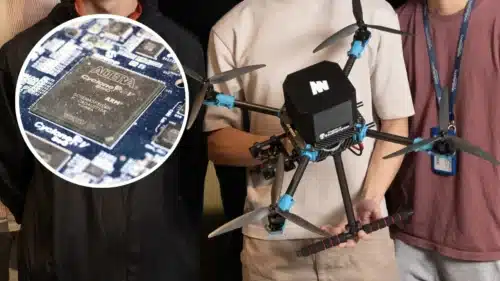
A team of student engineers from the University of Southampton has developed a blockchain-based “black box” system for drones. The system lets an autonomous drone record operational and sensor data directly onto a blockchain during flight, creating a record of its activities.
Like aircraft flight recorders, it logs a drone’s performance data continuously. Instead of storing information in a single database, the system spreads it across a decentralized digital ledger, making records harder to change. This method helps build confidence in autonomous systems that operate without human control.
The development matters because drones face conditions such as vibration, movement, limited power, and unstable communication signals. Despite these challenges, the verification system worked throughout the flight, showing that blockchain can run on the hardware used in autonomous drones.
The system uses a blockchain protocol from a technology company. Each device on the network runs a full blockchain node, storing and checking data independently. While the data stays on each device, all network participants can check the records, ensuring information cannot be changed or deleted.
This decentralized setup removes the need for cloud servers or centralized databases used in other monitoring systems. By letting machines create and verify their own records on site, the system provides a way to ensure reliability and accountability in autonomous operations.
Another change was running the blockchain directly on a microprocessor system-on-chip instead of using external software. This integration improved performance and efficiency. Moving the blockchain processes closer to the hardware increased performance and energy efficiency compared with other setups. These gains are important for devices like drones, which have limits on computing power and battery life.
The project shows that verification can be built into the hardware of autonomous machines. As intelligent systems become more common in public and industrial settings, the ability to prove what a machine has done is becoming essential for safety and public confidence.
Until now, most systems have used cloud servers or centralized databases to record activity, which depend on connectivity and external oversight. This approach works under strict power limits and changing connectivity, showing that distributed verification can work in real-world autonomous environments. By embedding verification into devices, the technology allows connected machines to maintain records of their actions.


