For clinicians this explains how implants adjust stimulation based on brain signals to support long term management of movement disorders.
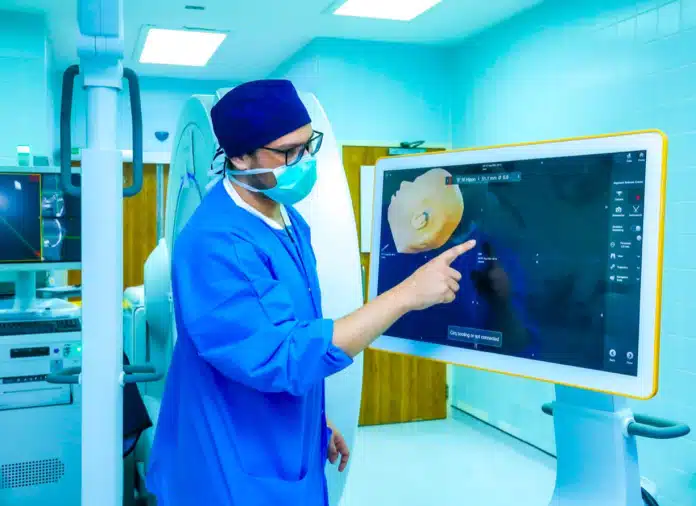
Managing neurological conditions such as Parkinson’s disease often requires long term treatment that adapts to changing brain activity. Conventional neuromodulation systems rely on fixed stimulation settings, which can limit responsiveness and require repeated clinical adjustments. This has created a need for treatment approaches that can respond dynamically to a patient’s neural signals over time.
At King Faisal Specialist Hospital and Research Centre in Riyadh, AI enabled brain implants are being used as part of advanced neurological care for selected patients. The implants continuously monitor brain signals and automatically deliver targeted electrical stimulation when abnormal activity is detected. This adaptive mechanism allows treatment to adjust in real time, reducing dependence on static programming.
In clinical use, the technology has supported more precise symptom management in patients with movement disorders. As stimulation adapts to neural patterns, some patients have been able to reduce medication under medical supervision while maintaining functional stability. The implant is applied as part of a broader treatment plan rather than a standalone therapy.
Implantation is performed using minimally invasive techniques and typically takes three to five hours. The procedure avoids large incisions and supports shorter recovery periods, allowing patients to return to routine activities sooner.
Key features of the technology include:
- Continuous monitoring of brain signals with real time adaptive stimulation
- Reduced need for manual recalibration compared to fixed stimulation systems
- Supports long term neuromodulation in selected neurological conditions
- Minimally invasive implantation with shorter recovery timelines
The continued clinical use of AI enabled brain implants reflects a shift toward adaptive, data driven neurological care, where treatment evolves alongside patient needs rather than remaining static.