

IBM and Arm are developing a dual architecture processor that combines software compatibility, high performance and AI acceleration for future enterprise computing systems and workloads.
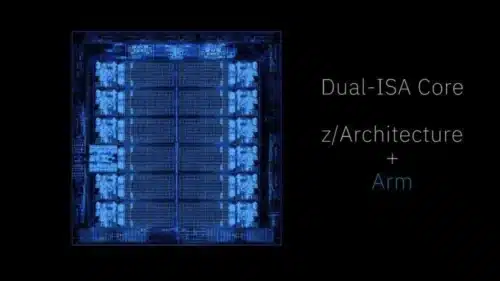
IBM and Arm are designing a dual architecture processor for future IBM Z and LinuxONE systems, bringing Arm instructions directly into the processor alongside IBM Z and LinuxONE capabilities. The design aims to give enterprises greater flexibility as AI becomes increasingly integrated into core business operations.
Built using a 2-nanometre technology node, the processor will feature 11 high-performance cores operating at more than 5.7GHz. It will also include AI inference accelerators for in-transaction fraud detection, a dedicated on-chip data processing unit for I/O acceleration and a large cache architecture for demanding enterprise workloads.
Rather than treating Arm as a separate subsystem, the architecture allows each processor core to execute both Arm and IBM Z or LinuxONE instructions natively. This enables the two software environments to coexist within the same enterprise system while retaining the established performance, security, encryption and availability characteristics associated with IBM platforms.
The approach is intended to support organisations modernising application portfolios and incorporating AI into business processes. IBM said the architecture could provide access to the growing Arm software ecosystem while maintaining the qualities required for enterprise computing.
Arm’s inclusion also reflects the increasing adoption of the architecture across AI and computing workloads. The companies said bringing Arm compute and its software ecosystem to IBM Z and LinuxONE could give organisations more choice when deploying AI applications.
The processor is being positioned for mission-critical enterprise infrastructure, where performance, reliability and scalability remain important considerations. IBM Z and LinuxONE platforms can scale to hundreds of cores and tens of terabytes of memory, providing a foundation for demanding workloads.
The development therefore combines established enterprise computing capabilities with Arm-based technology, potentially expanding the range of applications and software environments available to IBM customers as AI workloads continue to grow.