A new high-performance system-on-module combines heterogeneous computing, on-device AI, and multi-camera support for robotics, vision, and industrial edge systems.
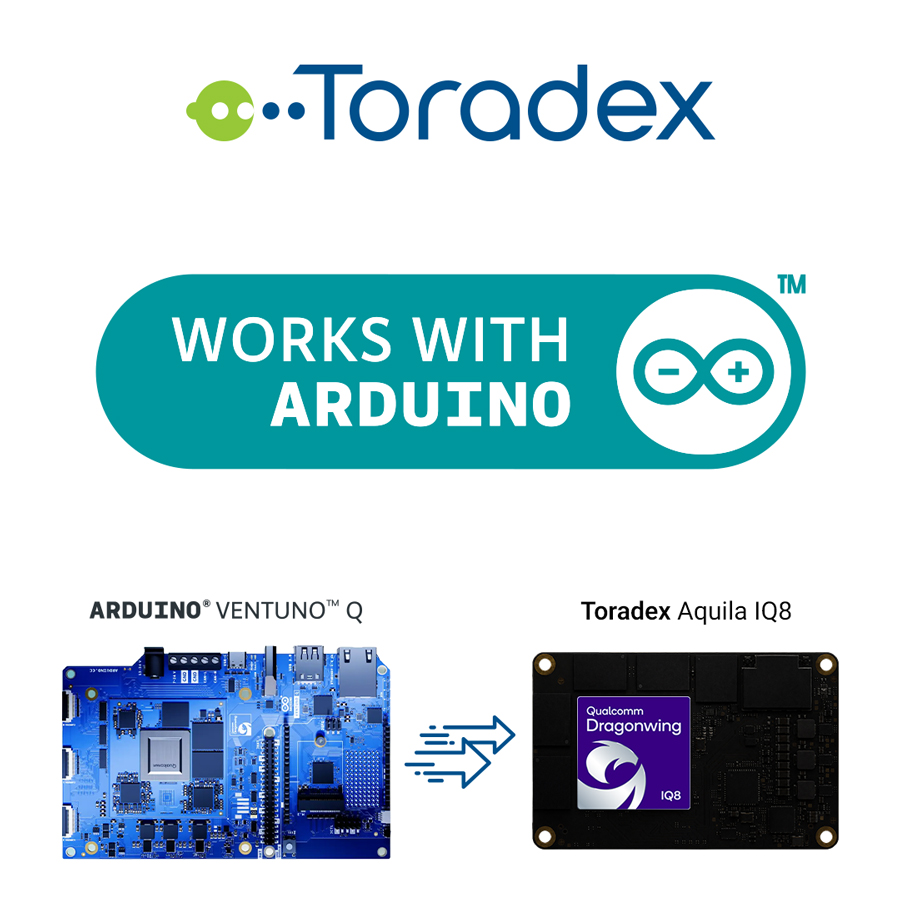
Industrial and embedded AI applications are increasingly moving away from cloud-dependent processing, creating demand for compact computing platforms capable of running complex workloads locally. Addressing this requirement, Toradex has introduced the Aquila IQ8 System on Module (SoM), powered by the Qualcomm Dragonwing IQ-8275 industrial processor.
The module is designed to deliver high-performance, power-efficient AI processing for applications including robotics, autonomous machines, computer vision, industrial automation, and edge computing. By processing AI workloads directly on the device, the platform can support faster responses while reducing dependence on continuous cloud connectivity.
At the heart of the Aquila IQ8 is heterogeneous processing that combines an eight-core Qualcomm Kryo Gen 6 CPU, comprising four performance and four efficiency cores, with a Qualcomm Adreno 623 GPU and a dedicated Qualcomm Hexagon NPU. The NPU delivers up to 40 Dense TOPS of AI processing capability, enabling demanding inference workloads at the industrial edge.
The key features are:
- 40 Dense TOPS dedicated AI processing
- Eight-core Kryo Gen 6 CPU
- Integrated Adreno 623 GPU
- Up to 12 concurrent camera streams
- Rugged 400-pin industrial architecture
The integrated processing architecture also supports advanced computer vision applications. With support for up to 12 concurrent camera streams through three quad-lane MIPI CSI interfaces, the module can be used in multi-camera inspection, machine vision, navigation, and environmental sensing systems. It is also positioned for workloads such as sensor fusion, anomaly detection, predictive maintenance, and local generative AI models.
Built on the Aquila platform’s rugged 400-pin board-to-board architecture, the module provides access to high-speed interfaces while the Direct Breakout approach is intended to simplify carrier-board development. This can help OEMs reduce the complexity associated with integrating high-performance processors into compact industrial products.
Potential applications include autonomous mobile robots, drones and UAVs, intelligent vision systems, industrial AI boxes, medical and diagnostic equipment, agricultural machinery, energy infrastructure and industrial PCs.
On the software side, the module is supported by Toradex’s board support packages and the Torizon embedded Linux platform, providing capabilities for secure software updates, device management and long-term maintenance. The platform is intended to offer a development path from AI prototyping to long-lived industrial deployments.
Click here for the original announcement.