Researchers have developed an artificial synapse that closely mimics how the human brain processes and stores information, potentially paving the way for ultra-efficient AI hardware with significantly lower energy consumption.
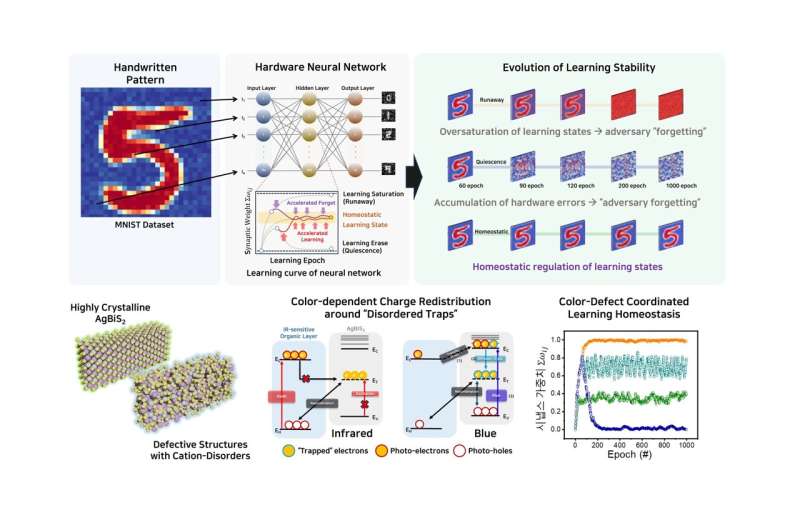
Artificial intelligence systems may soon become far more energy-efficient thanks to a new artificial synapse designed to replicate how the human brain learns and processes information. The advancement addresses one of the biggest challenges facing modern AI hardware: the separation of memory and computation, which creates significant power and performance bottlenecks.
The human brain performs complex cognitive tasks using billions of neurons interconnected by synapses. Unlike conventional computer architectures, biological synapses simultaneously store and process information, enabling rapid decision-making while consuming remarkably little energy. Researchers are increasingly looking to emulate this capability through neuromorphic computing technologies that mimic neural functions in electronic hardware.
The newly developed artificial synapse by Sungkyunkwan University (SKKU) demonstrates key characteristics of biological neural connections, including the ability to adjust its response based on previous signals. This behavior, known as synaptic plasticity, is essential for learning and memory formation in the brain. By reproducing these functions electronically, the device can both retain information and perform computational tasks within the same structure.
A major advantage of the technology is its potential to reduce the massive energy requirements associated with current AI systems. Traditional processors continuously transfer data between memory and computing units, creating delays and increasing power consumption. Integrating memory and processing within artificial synapses could eliminate much of the data movement, resulting in faster, more efficient AI operations.
The development is part of a broader industry effort to create brain-inspired hardware to support next-generation applications such as autonomous robots, intelligent sensors, wearable electronics, and edge AI devices. Researchers believe neuromorphic systems built around artificial synapses could enable real-time learning while consuming a fraction of the power of today’s AI accelerators.
While the technology remains in the research phase, the achievement highlights growing progress toward hardware that more closely resembles biological intelligence. As AI workloads continue to expand, such brain-inspired electronic components could play a crucial role in overcoming the efficiency limitations of conventional computing architectures and accelerating the deployment of smarter, low-power electronic systems.