

Optical modules aim to double data transfer speed per lane, increase network capacity, and reduce power use in AI data centres.
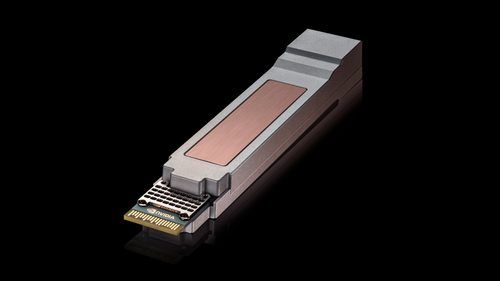
NVIDIA and Cisco have announced plans for Ultra-Dense Small Form Factor Pluggable (USFP), an optical module designed to support 400Gbps per lane in AI data centre networks. The technology aims to increase network bandwidth without requiring additional switch layers or major changes to existing infrastructure.
As AI models grow and demand for inference increases, AI factories need to connect more computing systems while managing network complexity, power consumption, and costs. Increasing the amount of data transferred per watt and per switch can help operators use their infrastructure more efficiently.
Scaling these networks requires higher bandwidth per connection and more connections per switch. Once a switch reaches its capacity, expanding the network may require additional switch layers and optical links, which can increase latency, power consumption, and costs.
USFP is designed to support the transition from 200Gbps-per-lane to 400Gbps-per-lane Ethernet networks. It aims to help operators increase network capacity while retaining the existing pluggable transceiver deployment model used across data centre networks.
The first planned USFP-based transceivers will use an octal small form factor pluggable (OSFP)-sized footprint and support switches and SuperNICs, which are network interface cards designed for high-performance computing. Each module will contain 16 full-duplex lanes, with plans to expand to 32 or more lanes in future versions.
By doubling the bandwidth per lane and increasing the number of lanes, USFP is designed to support more 1.6Tbps endpoints without adding network tiers. The planned configuration will provide an aggregate bandwidth of 12.8Tbps.
Compared with 200Gbps-per-lane pluggable modules, USFP is designed to provide four times the bandwidth and front-panel bandwidth density within a similar OSFP-sized footprint. It is also expected to offer approximately 1.3 times the power efficiency. These improvements could allow AI infrastructure operators to connect more computing capacity within the same network space while reducing the share of total AI factory power consumed by networking equipment.
Click here for the original announcement.