

Researchers have developed a lightweight adaptive lens using transparent graphene electrodes, enabling electronic focus control for cameras, medical imaging and wearable optical technologies.
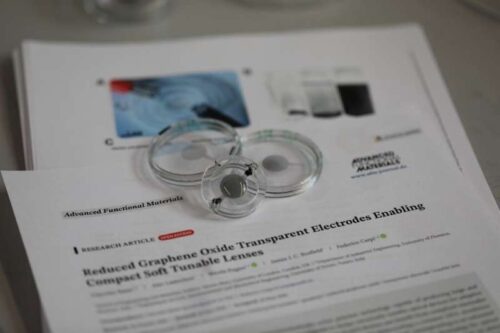
Researchers at Queen Mary University of London have developed a prototype soft lens using transparent graphene oxide electrodes, enabling its focal distance to be changed electronically without bulky mechanical components. The work could support smaller, lighter optical systems for medical imaging, autofocus cameras and wearable displays.
The research addresses a key limitation in conventional electrically actuated adaptive lenses. Traditional designs position electrodes around the lens edges because the electrode materials may obstruct light. Soft electrically driven lenses can also require electrodes that are opaque, limiting their suitability for optical applications.
By producing transparent electrodes from reduced graphene oxide, the researchers integrated the electrodes directly into the expanding actuator beneath the lens. This approach reduces the device’s size and complexity while allowing the lens to change focus when a small electric field is applied.
The prototype behaves more like a living eye than a conventional rigid optical lens. When electricity is applied, electrically active polymers alter the lens shape, allowing objects at different distances to be brought into focus. Researchers carefully controlled the amount of graphene deposited onto the soft membrane to balance electrical performance with optical clarity.
The resulting lens can adjust its focus across a range of distances while maintaining a compact design. The research, published in Advanced Functional Materials, demonstrates how ultrathin transparent electrodes can be integrated into electrically driven soft lenses using relatively simple manufacturing techniques and inexpensive materials.
Although the technology remains at the research stage, its potential applications include autofocus cameras, wearable displays, virtual and augmented reality headsets, miniature medical imaging devices and scientific instruments. These applications could benefit from alternatives to conventional mechanical focusing systems, which can add weight, complexity and cost.
The researchers also highlight opportunities for soft robotics and advanced materials. Electrically active polymers can behave like artificial muscles, changing shape smoothly and silently in response to electrical signals. Further work is needed to improve graphene electrode transparency and optimise performance, but the findings demonstrate a route towards compact, electrically tunable optical devices.