Can RF cables withstand constant movement inside modern vehicles? An RF cable assembly is designed to improve flexibility without compromising signal performance.
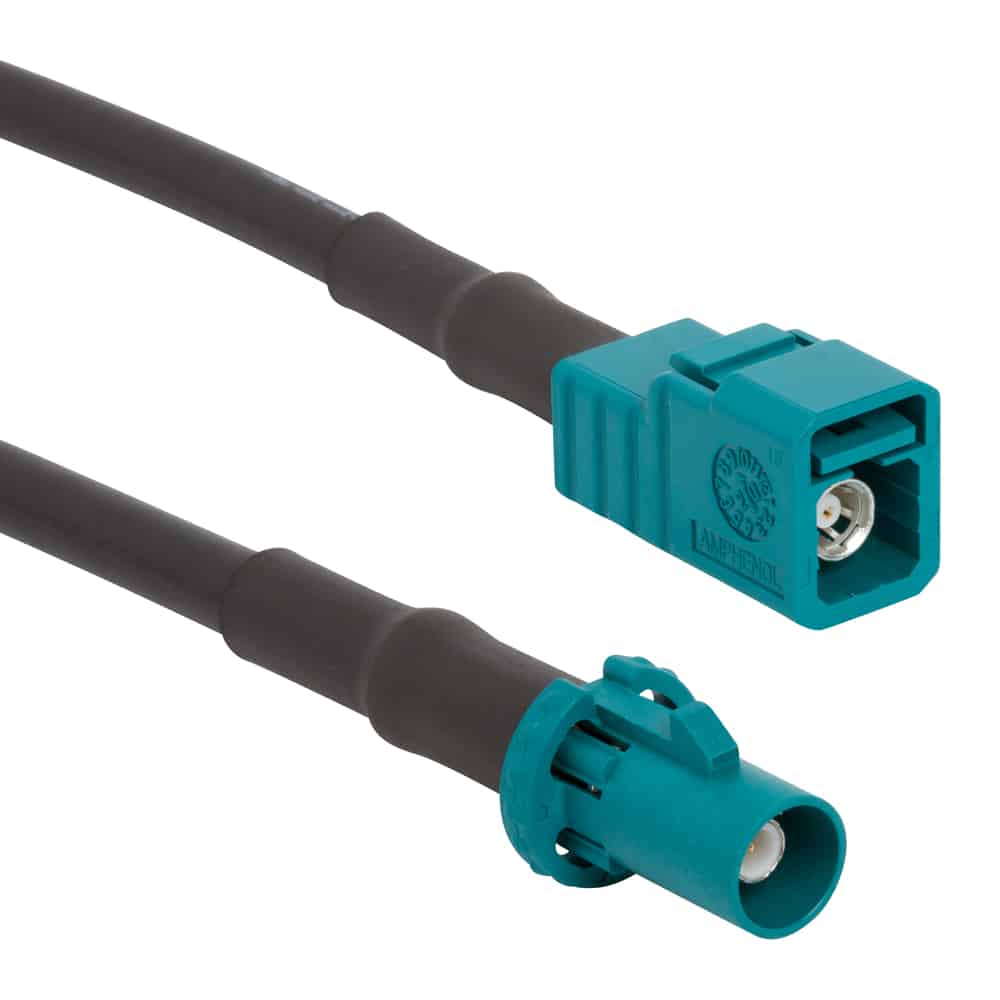
Amphenol RF has introduced high-flex FAKRA cable assemblies for automotive applications that involve repeated movement, vibration and constrained installation spaces. Based on RG-58 cable, the assemblies are intended for vehicle communication systems, GNSS/GPS, telematics, infotainment and other RF-enabled technologies where conventional coaxial cables may be subjected to mechanical stress.
As vehicles incorporate more connected systems, cable routing has become increasingly complex, particularly in areas with moving components. The new assemblies are designed to maintain electrical and mechanical performance under repeated flexing, making them suitable for automotive as well as industrial and off-highway equipment applications.
The RG-58 cable uses a fine-wire stranded copper centre conductor and a tinned copper braid shield to support flexibility during continuous movement. The 50-ohm assemblies operate at frequencies of up to 3GHz while maintaining signal integrity under repeated flexing and vibration. They are available in jack-to-plug, plug-to-plug and jack-to-jack configurations and include application-specific FAKRA key codes to prevent mismating.
Standard cable lengths range from 12 inches to 3 metres, allowing the assemblies to be used across different installation requirements. According to the company, the cables can provide an alternative to conventional coaxial cables in applications where repeated mechanical movement can affect cable performance and service life.
Click here for the official announcement.