




Can humanoid robots work more naturally alongside people? A platform combines tactile sensing with physics-based AI for industrial environments.
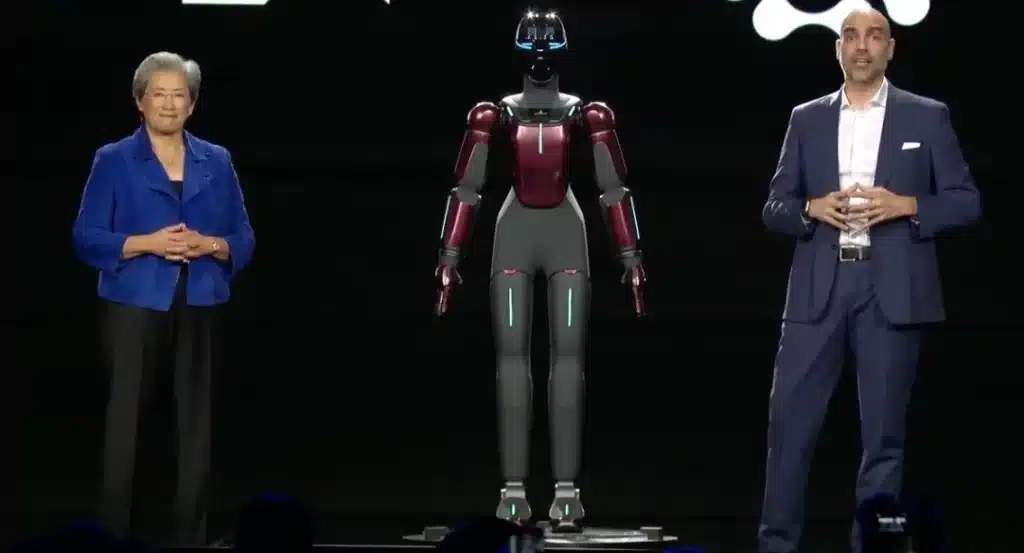
Italian robotics company Generative Bionics has unveiled Gene.01, a humanoid robot platform designed for industrial applications requiring close collaboration with people. Built in six months, the platform combines full-body tactile sensing with physics-native artificial intelligence (AI) and has been released alongside an open-source robot model that developers can use to build and test Physical AI applications before deployment.
The platform is intended for manufacturing, logistics, inspection, public safety and healthcare, where robots are expected to operate in shared workspaces with humans. Unlike fixed-purpose humanoids, Gene.01 is designed as a configurable platform that can be adapted through AI models, exterior design and end effectors for different industrial tasks. The company is already working with shipbuilder Fincantieri to develop a welding robot for shipyard operations.
The platform integrates distributed smart skin capable of detecting touch, proximity, force and temperature, enabling it to anticipate human presence and respond before and during physical contact. The force-sensing capability also allows operators to demonstrate not only movement but the amount of force required for a task, addressing limitations of vision-only learning. The robot is based on the company’s physics-native AI architecture, which jointly optimises the robot’s mechanics, sensing and motion control. The approach builds on research recently published in Nature Machine Intelligence.
To encourage wider development, Generative Bionics has made the robot’s digital twin available through software distribution platforms including PyPI, conda-forge and the robot operating system (ROS) build farm, allowing developers to integrate the platform into existing AI and robotics workflows with standard installation tools.
“Unlike other one-size-fits-all humanoids, Gene.01 is a scalable platform, customised at the edge of AI, design and end-effector level to maximise each customer’s needs,” says Daniele Pucci, chief executive officer of Generative Bionics. “Our goal is to amplify humans with robots that can sense, feel and learn from the physical world while adapting to specific industrial tasks.”
Click here for the official announcement.


