




Are humanoid robots ready for large-scale deployment? A record-breaking showcase signals the technology is rapidly moving beyond research labs.
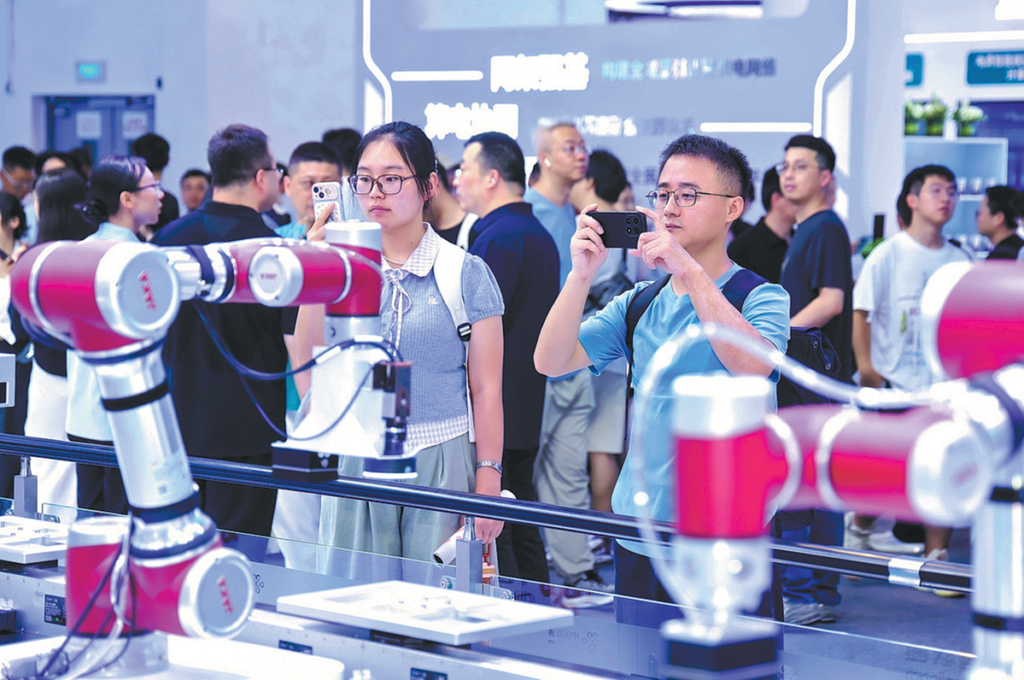
China’s 2026 World Artificial Intelligence Conference (WAIC) set a record for humanoid robotics, with more than 200 companies showcasing embodied AI technologies. The figure marks a sharp increase from the 25 humanoid robots exhibited at the 2024 edition, underscoring the technology’s rapid transition from research prototypes to deployable industrial systems.
The record participation highlighted growing industry confidence in humanoid robotics for manufacturing, logistics, healthcare, and other industrial applications. According to China’s Ministry of Industry and Information Technology, the country accounted for around 90 per cent of global humanoid robot shipments in 2025, with domestic production expected to exceed 100,000 units in 2026. The expansion is being supported by advances in large language models, falling component costs, and increasing availability of application-specific training data.
The conference also featured AI infrastructure and robotics technologies supporting the next phase of humanoid development. Companies demonstrated high-performance computing platforms, AI accelerators, embodied intelligence systems, and multimodal AI models designed to improve robot perception, reasoning, and task execution. The event hosted more than 1,100 exhibitors displaying over 3,000 technologies, including more than 300 products making their global debut.
Industry experts noted that the conversation has shifted from demonstrating humanoid capabilities to deploying robots in real-world environments where they can perform useful tasks alongside people. The exhibition reflected broader progress in AI hardware, computing infrastructure, and intelligent automation required to support large-scale adoption.
“This leap is no accident. Behind the transition from small-batch trial production to large-scale mass production lies a combination of improved domestic large language model capabilities, falling costs for core components and the continuous accumulation of scenario-based data,” says Wei Liang, Vice-President of the China Academy of Information and Communications Technology.


