

NIT Rourkela has patented a simplified hybrid energy storage architecture that combines batteries and supercapacitors to manage power surges, reduce battery stress, and improve EV efficiency.
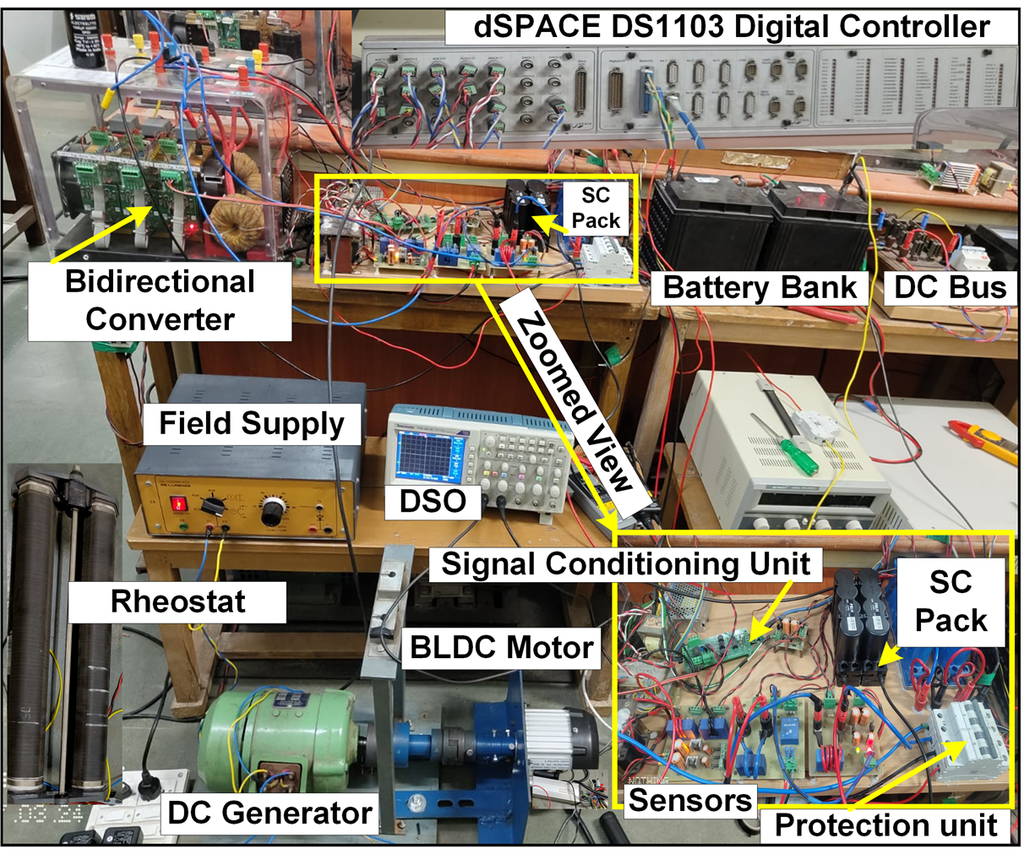
A newly patented hybrid energy storage system developed at NIT Rourkela could help electric vehicles handle sudden acceleration, braking and speed changes while reducing stress on their battery packs. The architecture combines a battery and supercapacitor through a simplified power-electronics design that uses fewer components than conventional hybrid energy storage systems.
Developed by Prof. Monalisa Pattnaik and her research team, including Dr. Pradyumna Kumar Behera and Mr. Karan Gupta at the Department of Electrical Engineering, the technology is designed primarily for low-voltage EV platforms operating between 24 V and 60 V DC. The researchers have secured a patent for the system, which could find applications in electric scooters, motorcycles, e-rickshaws, cargo tricycles and industrial utility vehicles.
The key feature of the architecture is its three-component design: a single power converter connecting the battery and supercapacitor to the vehicle’s electrical system, an inductor in the electrical path, and one control system for managing power flow. This approach reduces the number of switches and control circuits required, potentially lowering system complexity while maintaining efficient power management.
The technology addresses a major challenge in EV battery systems. During rapid acceleration, deceleration and regenerative braking, battery packs can experience sharp changes in current demand. Repeated exposure to such high-rate power fluctuations can increase thermal and electrical stress on battery cells and contribute to performance degradation over time.

In the NIT Rourkela design, the supercapacitor handles these short-duration, high-power events. Because supercapacitors can charge and discharge rapidly and support significantly higher power density than conventional batteries, they can absorb regenerative braking energy and deliver additional power during acceleration. This reduces the battery’s exposure to sudden current spikes.
The inductor provides an additional layer of protection by smoothing rapid current changes, while the unified control system manages power flow during both acceleration and deceleration. Together, these elements enable the battery and supercapacitor to operate as a coordinated hybrid energy storage system without requiring multiple dedicated converters.
Testing under sudden braking and rapid acceleration and deceleration conditions showed that the system maintained a stable 48 V output while enabling smoother battery-current behaviour and efficient supercapacitor response to transient power demands.
Beyond light electric vehicles, the architecture could also support automated guided vehicles, warehouse carts, DC microgrids and renewable-energy charging infrastructure. By simplifying the power-electronics hardware while improving the management of short-duration energy surges, the patented system could offer a practical approach to extending battery life and improving energy utilisation in low-voltage electrified systems.