A design update brings simulation, workflows, and support across RF, digital, power, quantum, and photonics, changing how systems are built and tested.
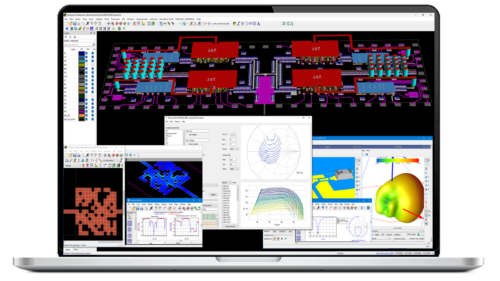
Keysight Technologies has released ADS 2026 with updates across circuit simulation, EM analysis, electrothermal workflows, layout, and verification. The platform continues to support RF, microwave, high-speed digital, power electronics, quantum electronics, and silicon photonics in one environment.
The release focuses on improving simulation accuracy, reducing runtime, and increasing automation using Python and high-performance computing. It also improves design flow from schematic to layout and verification.
Circuit simulation now supports the BSIMIMG 103.1.0 model and improves DC convergence, especially for SOI processes. EM simulation adds a FEM nodal waveguide port solver with internal meshing, support for delta gap and closed-loop feeds for multi-pin components, and up to 30% speed improvement in the Momentum engine. RFPro now includes Python automation for metal biasing and far-field data export.
Electrothermal simulation setup is reduced with automatic generation of technology files when an ETH substrate is present. Data display now includes a Python-based equation editor and the ability to plot expressions directly.
High-speed digital design adds support for LPDDR6, LPDDR7, and HBM3 in Memory Designer. System Designer includes Ethernet 802.3df, PCIe Gen7, and USB. SerDes workflows add an AMI model builder for PCIe Gen7 and a Mueller-Muller phase detector. Via Designer now supports coax differential feeds, and S-parameter tools enable automatic differential pair matching based on port names.
On the design side, ADS 2026 updates OpenAccess to version 22.61p022, adds a dark mode, and allows export of designs, libraries, and workspaces as Python code. Layout tools now include physical connectivity view and multi-layer keepouts for RF traces.
Import and export workflows expand with AEL APIs for GDSII, DXF/DWG, and Gerber formats, along with a higher-resolution ODB++ importer. Verification improves with better design rule checks, clearer reporting, and remote DRC execution using PuTTY with Assura, PVS, and Calibre.
The release also includes an AI-based help chatbot, updates to licensing and documentation, and integration with Modulation Explorer.