How far can electric multirotors be pushed beyond conventional flight? An Indian-developed platform has recorded a reported 498 kmph during high-speed trials.
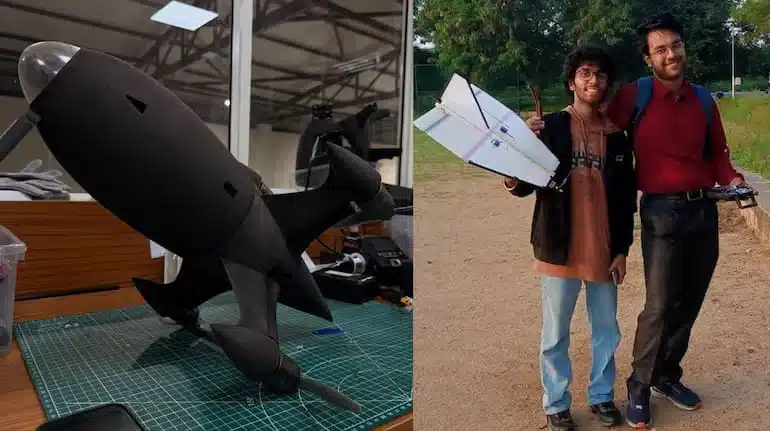
Apollyon Dynamics has developed an electric multirotor UAV that reached a reported 498 kmph during trials, highlighting how changes to propulsion, airframe design, and motor configuration can push a platform traditionally built for hovering towards high-speed flight. The achievement has also been recorded in the India Book of Records.
The platform, called Ahuti Mk II, was developed specifically around high-speed operation rather than the stability and hovering characteristics typically associated with multirotor drones. According to the company, reaching the reported speed required about 10 iterations involving the frame, propulsion system, and motor configuration.
The redesign addresses one of the key challenges in high-speed multirotor flight: maintaining control and structural performance as the platform operates well beyond the speeds normally associated with this architecture. Changes to the airframe and propulsion system were therefore made together rather than treating speed as a single motor-performance problem.
The development also builds on the company’s work with defence users. Its systems have been tested at military firing and operational ranges, including Babina and Gopalpur, while earlier platforms had been supplied to the Indian Army. The company says cooperation with the Army supported its testing and development activities.

Beyond the headline speed, the development demonstrates the engineering trade-offs involved in adapting electric multirotor architectures for specialised missions. Higher speed can reduce the time needed to reach a target area, but achieving it requires the propulsion, structure, control systems, and power architecture to work together under more demanding conditions.
The company says it worked on the latest redesign from December through August before reaching the reported performance. It is also evaluating the economics of its counter-drone systems, with cost relative to operational capability forming part of its development considerations.
“We had to rethink the platform around speed rather than simply increase motor performance. Ahuti Mk II went through about 10 iterations across the frame, propulsion and motor configuration before reaching this level,” says Jayant Khatri, Founder, Apollyon Dynamics.