





How can vision systems capture fast-moving objects without losing image detail? A larger-pixel global shutter sensor targets demanding industrial environments.
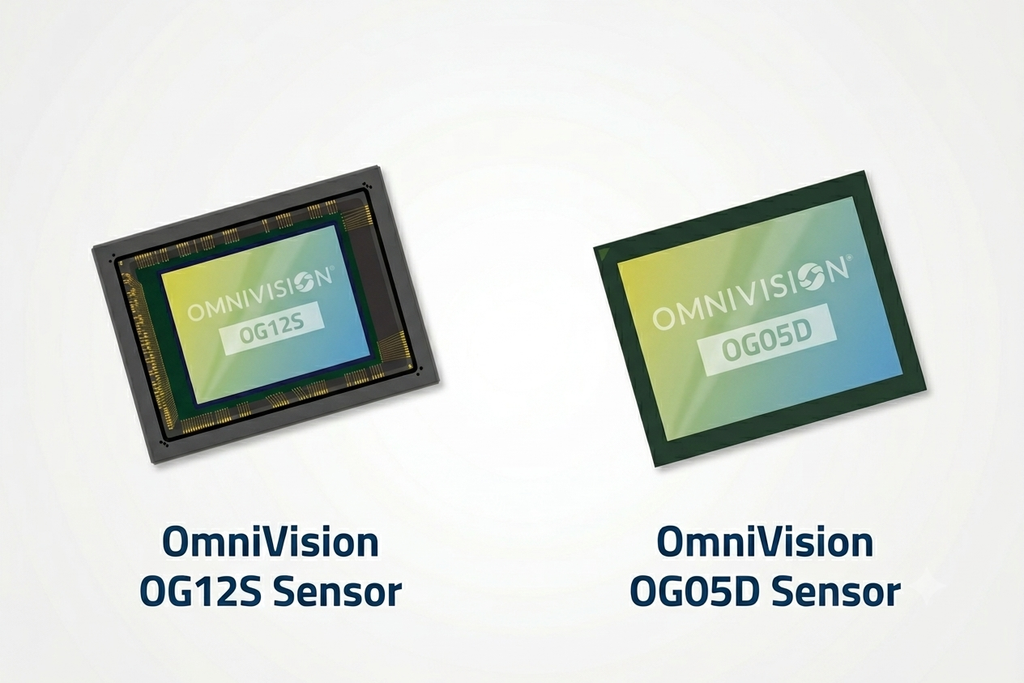
OMNIVISION has introduced a 12-megapixel backside-illuminated global shutter CMOS image sensor for factory automation and intelligent transportation systems.
The OG12S10 uses 3.45-micron pixels and a global shutter architecture, which exposes pixels simultaneously to reduce distortion when capturing moving objects, machinery, or vehicles. It supports a 4096 × 3072 resolution and frame rates of up to 75 frames per second.
The sensor can also operate with an exposure time as short as 1 microsecond, a specification aimed at applications where fast-moving targets, vibration, or rapid changes in position can affect image capture.
For scenes with significant differences between bright and dark areas, the sensor combines dual conversion gain (DCG) with high dynamic range. It offers a 74dB dynamic range and a 20,000-electron full-well capacity. A 12-bit analogue-to-digital converter is used to convert the captured signal into digital image data.
The sensor also incorporates Nyxel near-infrared technology, with quantum efficiency of more than 60% at 850nm and 40% at 940nm. This makes NIR response another consideration for machine vision systems that operate beyond visible-light imaging.
The 1.1-inch optical format is paired with PureCelPlus-S die-stacking technology. The device supports 16-lane sub-LVDS at up to 1.1Gbps and four-lane MIPI interfaces for transferring image data to processing systems.
Kelly Yan, Staff Marketing Manager, OMNIVISION, says, “In situations where speed, vibration and motion are constant, maintaining image clarity becomes critical. However, not all image sensors are equipped to deliver the consistency required in these conditions. Global shutter sensors, like the OG12S10, address this challenge by capturing each frame with synchronised exposure, eliminating motion-related distortions.”
Click here for the official announcement.

