




A novel 3D printing technique for shape-changing materials, inspired by muscle behaviour, could make robotics, biomedical devices, and energy systems progressive.
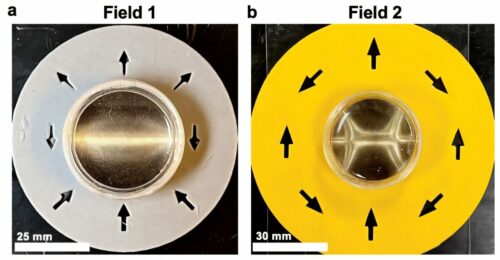
Researchers at Oregon State University (OSU) have pioneered an innovative 3D printing technique for liquid crystalline elastomers (LCEs), materials that mimic muscle movement. This innovation, led by Devin Roach, assistant professor (mechanical, industrial, & manufacturing engineering), OSU allows LCEs to perform tasks such as crawling, folding, and snapping immediately after printing. The research shows potential for advancements in robotics, medical implants, and renewable energy applications.
LCEs are lightly crosslinked polymer networks capable of significant shape change when exposed to stimuli like heat. “LCEs are basically soft motors,” explained Roach, noting their compatibility with human tissue. These materials are envisioned for applications such as implantable medical devices to deliver targeted drugs, stents, and incontinence treatments. Industries focused on robotics, aerospace, and energy systems are among those expected to benefit, particularly in scenarios requiring lightweight, adaptable, and durable components.
In robotics, LCEs show promise in exploring hazardous environments due to their flexibility. They could also serve as actuators in aerospace systems, such as those used for deep-space exploration and automated radar deployment. Additionally, LCEs have the ability to convert thermal energy, such as sunlight or alternating currents, into mechanical energy that can be stored for future use.
The unique properties of LCEs stem from their anisotropy and viscoelasticity. Roach explains, “Aligning the molecules is the key to unlocking the LCEs’ full potential.” Achieving precise molecular alignment during the digital light processing phase of 3D printing required the use of magnetic fields. Collaborators from Harvard University, University of Colorado, and national laboratories joined OSU in fine-tuning this process.
Beyond functional applications, this research highlights the potential of LCEs in mechanical damping. In related work, OSU students and collaborators demonstrated that 3D printing can create damping devices to dissipate energy effectively. These findings extend the scope of LCEs to fields like automotive engineering and earthquake-resistant architecture.
This innovative approach not only enhances the design of shape-changing materials but also opens doors to transformative applications across multiple industries


