




The SoC supports Bluetooth, Thread, Zigbee, and Matter for asset trackers, smart home devices, sensors, and other connected products.
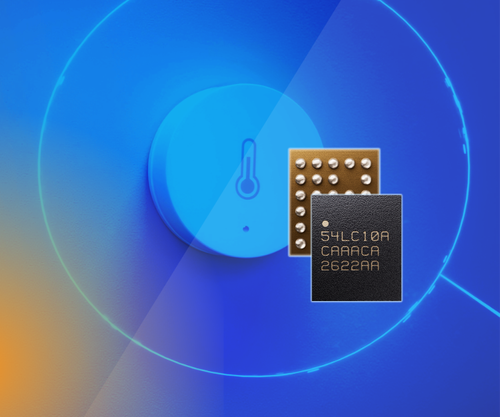
Nordic Semiconductor has introduced the nRF54LC10A, a low-power multiprotocol system-on-chip (SoC) for small connected products. The device supports Bluetooth Low Energy (LE), Bluetooth Channel Sounding, Thread, Zigbee, and Matter, and combines a microcontroller and wireless radio in a 1.9 × 2.3 mm chip-scale package (CSP).
The SoC is aimed at products where board space, power consumption, and cost are important considerations. Potential applications include asset trackers, Bluetooth LE devices, smart home accessories, and Matter-enabled sensors. It can also operate as a Thread radio coprocessor (RCP) in home hubs and Thread Border Routers.
The nRF54LC10A is the entry-level device in Nordic’s nRF54L Series. It comes with 1 MB of non-volatile memory (NVM) and 192 KB of RAM for simpler connected applications. Its multiprotocol support allows it to be used across different types of Internet of Things (IoT) products.
For asset tracking applications, the small package and low power consumption can help enable compact tracking devices, while Bluetooth Channel Sounding supports distance and positioning capabilities. The SoC can also support Thread and Zigbee accessories and simpler Matter-enabled sensors within its available memory.
The nRF54LC10A uses a 128 MHz Arm Cortex-M33 processor supported by a RISC-V coprocessor. It provides three SPI/TWI/UART instances and an analogue-to-digital converter (ADC) for connecting external components and peripherals.
Nordic lists preliminary performance of 503 CoreMark and 239 CoreMark/mA.
The wireless radio operates at 4.0 mA in receive mode and 5.8 mA in transmit mode at 0 dBm. Maximum transmit power is +4 dBm. Radio sensitivity is rated at -97 dBm for Bluetooth LE 1M and -101 dBm for 802.15.4.
Sleep-mode current ranges from 0.5 µA to 1.6 µA, depending on the operating mode. The SoC is built on a 22 nm process and uses low-leakage RAM and a multiprotocol radio design.
Click here for the original announcement.


