




Compact MEMS Pirani transducer combines thermal sensing and barometric measurement to deliver wide-range vacuum monitoring for portable instruments.
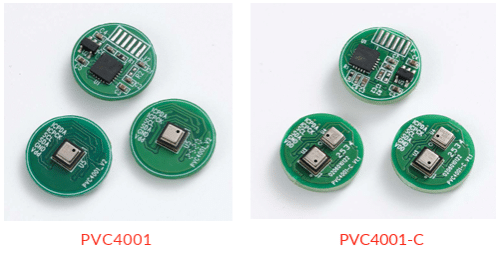
A new MEMS-based Pirani vacuum transducer designed by Posifa Technologies for portable and OEM vacuum measurement systems aims to simplify system integration while extending measurement range. Developed by Posifa Technologies, the device integrates sensing, signal processing, and pressure monitoring into a compact PCB assembly for digital vacuum gauges and leak-detection equipment.
The sensor is built around the company’s second-generation MEMS thermal conduction technology. Pirani sensors operate on the principle that the thermal conductivity of gases varies with vacuum pressure. As pressure decreases, fewer gas molecules conduct heat away from the heated sensing element, allowing the system to determine vacuum levels based on the resulting thermal changes.
The key features are:
- Wide vacuum measurement range: 0.001 Torr to 900 Torr
- Integrated MEMS Pirani sensor and barometric pressure sensor
- Digital I²C interface with programmable calibration points
- Pulsed excitation scheme for reduced drift and lower power consumption
- Operating temperature range: –25 °C to +85 °C with built-in temperature compensation
The new transducer integrates a MEMS thermal conduction chip with measurement electronics, a microprocessor, and a barometric pressure sensor. The device digitises sensor signals and outputs measurement data through an I²C interface, enabling straightforward integration into embedded monitoring systems. For applications requiring calibrated outputs, users can program up to ten calibration-point pairs, allowing the onboard processor to apply piecewise linearization for improved accuracy.
To maintain measurement stability across changing environmental conditions, the device incorporates several compensation mechanisms. A built-in temperature sensor enables real-time temperature compensation to correct for variations in gas thermal conductivity due to ambient temperature changes. In addition, the device employs a pulsed excitation method in which the sensing element is briefly heated and then switched off for a longer interval. This technique minimises drift caused by self-heating in high-vacuum environments while also lowering overall power consumption—an important feature for battery-operated instruments.
The transducer measures a response time under 200 ms. Because traditional Pirani sensors typically lose resolution above 10 Torr, the integrated barometric sensor extends the range of accurate measurements to higher pressures. This hybrid sensing approach allows the device to cover the transition from deep vacuum to near-atmospheric conditions.Such capabilities make the sensor particularly suitable for portable vacuum gauges, leak detection systems, and monitoring applications in closed systems operating under primary vacuum, including vacuum-insulated panels used in thermal insulation technologies.

