A silicon photodiode supports infrared detection for laser systems, optical testing, and signal monitoring, expanding options for measurement and sensing applications.
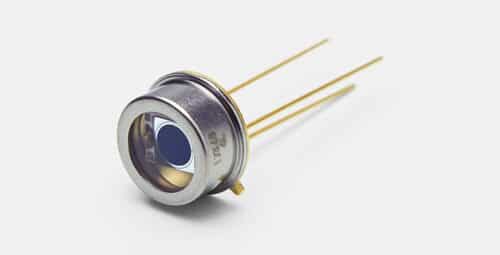
Hamamatsu Photonics has introduced the S17348, a silicon PIN photodiode designed for high-speed optical detection in YAG laser systems, fiber lasers, and analytical instrumentation. Built for applications where fast and accurate signal capture is critical, the device combines high infrared sensitivity with rapid temporal response to support precision optical measurement and monitoring.
The S17348 is optimized for YAG laser detection, offering infrared sensitivity of 0.37 A/W at a wavelength of 1060 nm. This level of sensitivity enables accurate detection of near-infrared signals, making it suitable for systems that rely on stable and precise optical monitoring. Its performance supports a range of laser-based analytical and industrial processes where signal accuracy directly affects measurement quality.
For applications requiring high-speed detection, the photodiode provides a cutoff frequency of 120 MHz at a reverse voltage of 100 V. This fast response allows the device to capture rapidly changing optical signals, making it effective in high-frequency measurement environments and real-time monitoring systems.
The device also features a large photosensitive area, which improves light collection efficiency and enhances signal reliability. A larger detection surface can help reduce signal loss and improve measurement consistency, particularly in systems where optical alignment may vary.
To support long-term use in demanding environments, the S17348 is packaged in a durable TO-5 metal housing. The metal package provides mechanical protection and operational stability, making it suitable for both laboratory and industrial installations.
In addition to YAG laser systems, the S17348 can be used in fiber laser detection and other optical measurement applications that require fast response, infrared sensitivity, and stable performance. Its combination of speed, sensitivity, and durability makes it suitable for a broad range of precision sensing tasks.
Click here for the original announcement.