How can power circuits support AI workloads without draining device batteries? The inductor can reduce resistance and losses to improve power conversion efficiency.
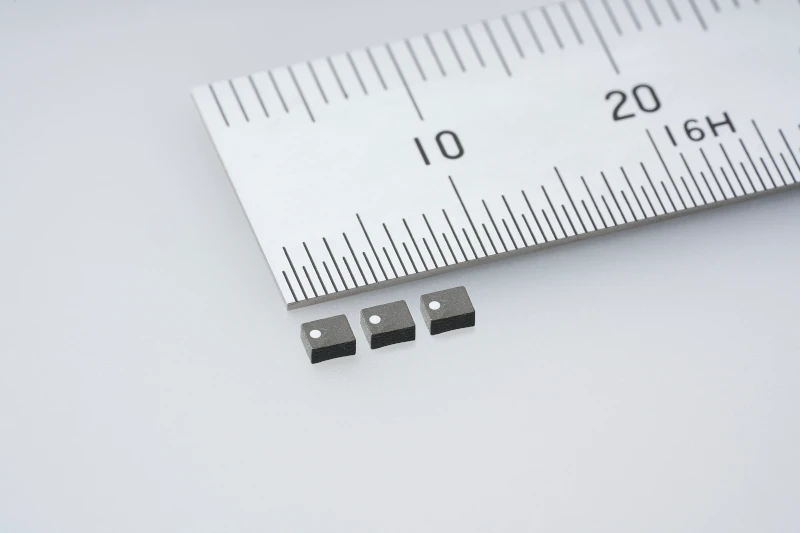
TAIYO YUDEN has started mass production of three wire-wound metal power inductors in its MCOIL LSEL series, designed for power supply circuits in AI PCs and other electronic devices. The components aim to reduce power loss and heat generation, helping improve energy efficiency in devices equipped with neural processing units (NPUs).
As AI features increase processing demands in notebook PCs and other electronics, power supply circuits must deliver precise power control to NPUs. Inductors used in these circuits affect conversion efficiency, making low direct-current (DC) resistance and reduced core losses important for limiting energy consumption and heat.
The LSEL series uses improved metal materials to lower DC resistance and reduce both direct-current and alternating-current losses. These improvements are intended to increase power efficiency in AI PCs, memory systems and storage equipment, where managing power consumption is increasingly important.
The inductors are designed for use as choke coils in power supply circuits, helping limit losses during current flow and supporting efficient operation under varying electrical conditions. Their reduced resistance can help manage heat generation in compact electronic devices.
One of the products, LSELC2016KKTR24M0N, measures 2.0 × 1.6 × 1.0 mm and has a DC resistance of 0.01 Ω. This is approximately 50% lower than the 0.0197 Ω resistance of the previous LSENC2016KKTR24M model of the same dimensions, which has a nominal inductance of 0.24 μH.
Click here for the official announcement.