




A quadruped robot completed a full marathon on one charge, demonstrating improved energy efficiency through lightweight hardware, optimised motor drives, and machine-learning-based locomotion control strategies.
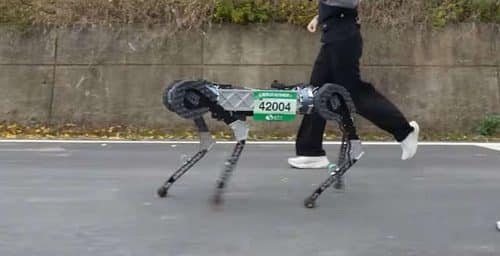
KAIST researchers have developed RAIBO2, a quadruped robot that completed a full 42.195-km marathon on a single battery charge. The robot finished the Sangju Marathon in South Korea in 4 hours, 19 minutes, and 52 seconds, demonstrating how system-level optimization can substantially extend the operating range of legged robots. The research was published in Nature on September 23, 2026.
RAIBO2 addresses a key limitation of quadruped robots: high energy consumption during locomotion. Unlike wheeled platforms, legged robots continuously consume energy to support their body weight, while repeated foot-ground impacts and joint movements introduce additional losses.
The research team combined mechanical, electrical, and software improvements rather than optimising a single subsystem. The robot uses lightweight leg mechanisms and a force-transparent mechanical structure to reduce energy demand. Its motor-drive system incorporates a low-resistance circuit designed to minimise electrical losses, while the locomotion controller uses machine learning to select energy-efficient movement patterns.
During the marathon, RAIBO2 maintained an average speed of 2.64 metres per second while negotiating elevation changes and slippery sections of the course. It consumed approximately 1280 Wh of energy during the run and recorded a total cost of transport of 0.25, compared with a human benchmark of 0.37.
The robot has a total battery capacity of 2016 Wh. Based on the measured energy consumption, the researchers estimate that it could have travelled an additional 25 km after completing the marathon. The study also reports approximately three times the travel range per charge compared with existing quadruped robots.
The researchers monitored voltage, current, temperature, battery status, position, speed, and altitude throughout the run. These measurements helped establish how energy was consumed across the system and validate the design approach under real-world conditions.
The findings could support longer-duration operation of legged robots in applications such as disaster response, mountainous environments, inspection, and other locations where regular recharging is difficult.


