




The 64-bit RISC-V cores come in 1-, 2-, and 4-core options, use less power, and support Linux, Zephyr, and FreeRTOS.
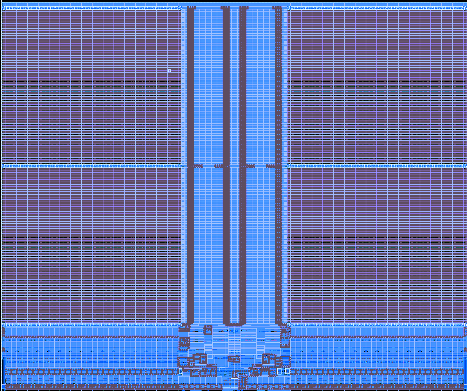
Micro Magic has made its MagicV 64-bit RISC-V processor cores available in 1-, 2-, and 4-core configurations. The processors are designed to combine high performance with low power consumption and support Linux, Zephyr, and FreeRTOS. The company has also demonstrated a multi-core MagicV processor running all three operating systems.
MagicV cores are designed for a range of performance and power targets. A single core running at 0.8V achieved 11,000 CoreMarks at 4.25GHz while consuming 200mW. At 1.1V, the core reached 5GHz and 13,000 CoreMarks. Micro Magic also reports a performance-to-power figure of 110,000 CoreMarks per Watt for its 64-bit RISC-V core.
For lower-power applications, the company has developed an ultra-low-power 64-bit RISC-V core that consumes 10mW while operating at 1GHz. The same core consumes less than 500mW when operating at 5GHz.
The cores can be used by semiconductor companies, chip designers, embedded system developers, and manufacturers developing products that require RISC-V-based processing. Depending on the configuration and operating system, developers can integrate MagicV into products ranging from low-power embedded devices and wearables to automotive electronics, mobile devices, and server systems.
Developers can run Linux, Zephyr, or FreeRTOS-based software on the processors to build applications such as embedded controllers, connected devices, automotive systems, and other compute platforms. The 1-, 2-, and 4-core options allow chip designers to select a processor configuration according to the computing and power requirements of their products.
The processors are intended for applications including automotive systems, mobile phones, rack-mounted servers, watches, and other systems where processing performance needs to be balanced with power consumption.
“Customers are impressed with the performance of the MagicV family of processors,” said Mark Santoro, Micro Magic’s CEO. “But the ultra-low power really blows them away.”
“The extremely small die area and low cost, combined with the low-voltage capabilities, are a real game-changer,” stated co-founder Lee Tavrow, PhD, MIT.
Click here for the original announcement.


