




A satellite battery completed its first space mission, proving its performance in orbit and supporting future small satellite missions with local production.
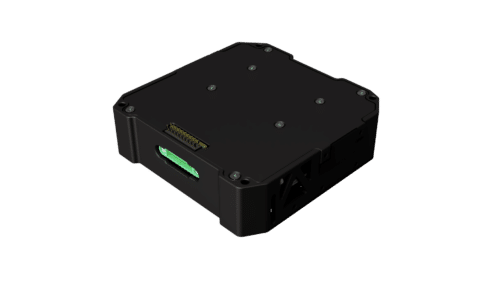
TakeMe2Space has announced that its PowerBank-50 satellite battery pack has completed its first space mission, making it space proven. The battery flew aboard Skyroot Aerospace’s Vikram-1 rocket during Mission Aagaman, which launched from the Satish Dhawan Space Centre in Sriharikota on 18 July 2026.
The mission marked a milestone for India’s private space sector, as Vikram-1 became the country’s first privately developed rocket to successfully reach orbit. During the mission, a PowerBank-50 unit supplied power to Cosmoserve Space’s payload mounted on the rocket’s Orbital Adjustment Module (OAM). Operating at an altitude of around 450 km, the battery continued to function throughout launch and while exposed to the vacuum, radiation, and temperature changes of space.
According to the company, completing a space mission gives the PowerBank-50 battery pack the flight heritage that satellite manufacturers, launch providers, and insurers typically look for before using a component in future missions. In the space industry, components that have already operated in orbit are generally considered lower risk because failures can affect an entire satellite mission.
Batteries are among the most tested satellite components as they must withstand launch vibrations and shocks before operating in the vacuum of space under repeated temperature changes. During the Vikram-1 mission, the PowerBank-50 battery pack operated with its lithium-ion cells, battery management system, heating system, and aluminium enclosure in orbit. With this mission, the product has moved from ground testing to in-orbit demonstration.
The company says this could reduce dependence on imported satellite battery packs for India’s small satellite sector by providing a locally developed alternative that is available off the shelf.
Satellite batteries keep spacecraft operational whenever solar panels cannot generate electricity, such as when satellites pass through Earth’s shadow. A battery failure can lead to the loss of a satellite. Until now, many Indian satellite developers have relied on imported battery systems, which often involve higher costs and longer procurement times. A domestically developed flight-tested battery could help startups, universities, and research organisations build satellites more easily.
PowerBank-50 provides more than 50 Wh of energy storage in a 380 g package. It includes lithium-ion cells, an onboard battery management system that monitors battery health, and integrated heaters to maintain operating temperature in orbit. Multiple battery packs can be combined to support CubeSats and microsatellites, with the company stating a mission life of up to five years in low Earth orbit.
Also read: TakeMe2Space has introduced an AI-powered star tracker, StarSense, designed to improve satellite attitude determination through onboard intelligence and optical precision.


