




What if a computer chip could manufacture DNA? Researchers have now used semiconductor technology to write dozens of genetic sequences simultaneously.
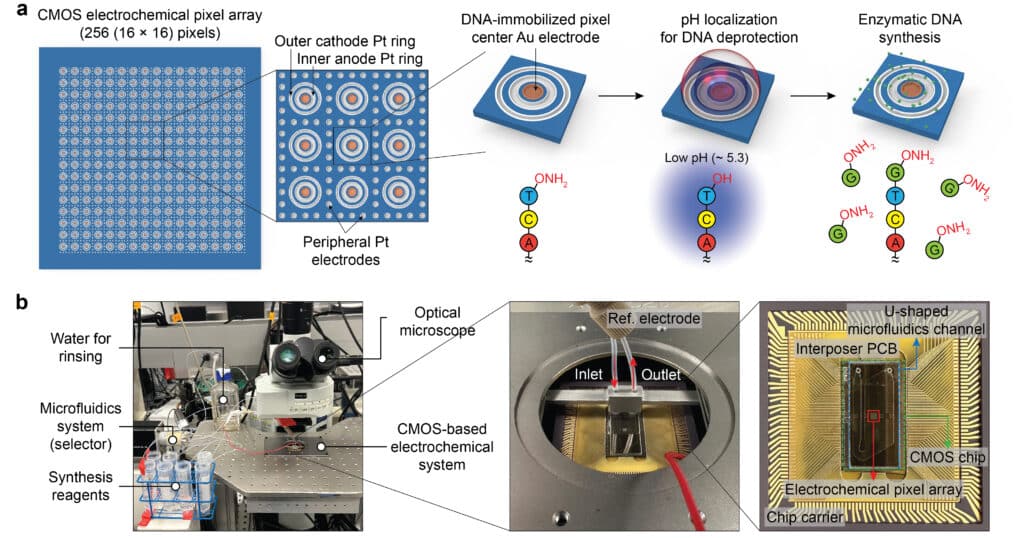
Researchers at Harvard University have developed a semiconductor chip capable of synthesising 64 different DNA sequences simultaneously, marking a significant advance in enzymatic DNA manufacturing. The system combines silicon electronics with water based chemistry, creating a new approach to producing synthetic DNA for biotechnology, medicine and future data storage applications.
Synthetic DNA is widely used in diagnostics, genome engineering and biological research. Most DNA manufacturing today relies on solvent intensive chemical processes that require specialised facilities. The newly developed platform instead uses an enzymatic process in water, making DNA synthesis potentially safer and more environmentally friendly.
The chip contains 64 individual synthesis sites where electrical currents precisely control local acidity levels. By generating and confining protons at selected locations, the system triggers DNA strand growth only where required. This enables dozens of unique DNA sequences to be produced in parallel on a single chip surface.
A key advantage of the technology is its scalability. Previous enzymatic DNA synthesis methods were typically limited to only a handful of sequences at a time. The new platform successfully created 64 distinct DNA strands, each up to 39 nucleotides long, establishing a new benchmark for parallel DNA synthesis using enzymes.

The researchers also demonstrated the technology’s potential for DNA data storage by encoding a 169 byte text into the synthesised DNA sequences. While large scale DNA storage remains a long term goal, the work highlights how semiconductor manufacturing techniques could eventually support high volume biological information writing.
“The chip did what we asked it to do: it localized low pH at selected sites,” says Han Sae Jung, co-first author of the study and a former graduate student and current postdoctoral researcher at Harvard. “The limitation came from the deprotection chemistry, not from the silicon. That leaves a clear next step for the field — develop a more direct acid-driven deprotection chemistry that can keep pace with the chip.”


