





A flexible electrostatic motor just 1–3 mm thick could eventually power wearable robots, assistive clothing and lightweight prosthetics.
Engineers at Switzerland’s École polytechnique fédérale de Lausanne (EPFL) have developed a flexible, thread-like motor that produces linear motion without conventional gears. Measuring 1–3 mm in diameter, the device can slide while bent and can be bundled with other motors to increase its force. In a laboratory demonstration, four motors working together lifted a 46 g chocolate bar. The technology could eventually enable robotic clothing that assists movement, although the current design remains a laboratory prototype.
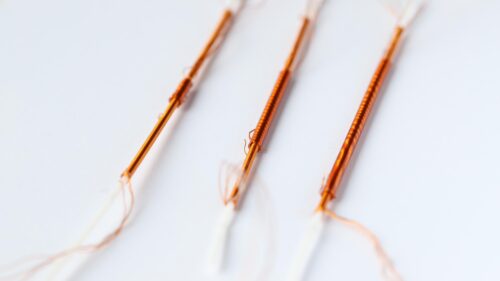
Developed by Sylvain Schaller and Herbert Shea at EPFL’s Soft Transducers Laboratory, the motor is called FiberMotor. Their research, Fiber-Format Flexible Linear Electrostatic Motors, was published in Advanced Materials on 27 September 2026. The university announced the development on 7 October 2026.
Unlike conventional electric motors that rotate and often require mechanisms to convert rotation into linear movement, FiberMotor slides directly along its length. Each unit consists of two concentric polymer fibres, one inside the other, with helically wound, insulated wire electrodes. Applying high-voltage electrical signals to the electrodes generates electrostatic forces that move the fibres relative to each other.
The system uses three electrical phases to produce a sequence of movements. Changing the order of the signals reverses the direction, allowing the motor to extend and retract. Because the fibres slide rather than rely on an artificial muscle material changing shape, the available stroke is determined by the fibre length rather than by a limited contraction ratio. The motor can also be moved manually against its actuation, a property known as backdrivability that is useful in wearable robotics because it allows natural movement against the mechanism.
The researchers report no-load speeds exceeding 85 mm per second and a specific force above 450 newtons per kilogram. Individual motors can generate holding forces exceeding 750 millinewtons under the reported conditions. Bundling multiple units increases the available force: four motors lifted and lowered a 46 g chocolate bar, while another demonstration used the bundled actuators to bend a tendon-driven robotic finger. These results demonstrate the principle, rather than the performance of a finished wearable assistance system.
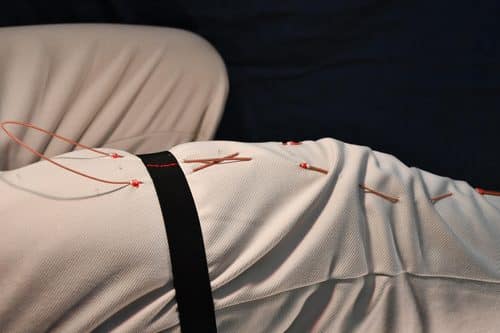
The fibres are manufactured by winding insulated copper wires around a core or mandrel and applying polymer insulation. The inner fibre receives an additional dielectric coating before it is inserted into the outer fibre. A thin layer of silicone oil between the fibres reduces friction and helps prevent electrical breakdown. The researchers also demonstrated how the actuators could be integrated into fabric shaped around a knee, illustrating a possible route towards wearable applications.
However, several engineering challenges remain. The reported prototypes were connected to a mains-powered high-voltage supply, operating at around 3 kV in the speed tests. The researchers identify insulation, dielectric breakdown, oil containment and durability under repeated bending as areas requiring further development. Although typical samples operated for more than 1,000 cycles, some ran continuously for 24 hours; these results do not establish the long-term reliability needed for everyday wearable equipment. The team also operated the motor without closed-loop position feedback, meaning missed steps under excessive loads could not automatically be corrected.
The researchers plan to improve the electrodes and materials, increase durability and integrate sensing to help the motor respond to the wearer’s movements. First author Schaller has founded a start-up, Elecsyor, to commercialise the technology, but the research does not establish that a finished consumer or medical product is available. The work received funding from the Swiss National Science Foundation and the Novo Nordisk Foundation.
In India, research groups such as the TTK Centre for Rehabilitation Research and Device Development (R2D2) at the Indian Institute of Technology Madras develop assistive and rehabilitation technologies, including prosthetic and mobility devices. A lightweight, flexible actuator could eventually offer another approach to wearable assistance if its cost, reliability and high-voltage safety requirements can be addressed. For now, FiberMotor is a research-stage technology, not an available mobility aid.
For more information, click here.
