




A forehead patch tracks brain water changes during sleep, helping study the brain’s waste-clearing process at home over multiple nights.
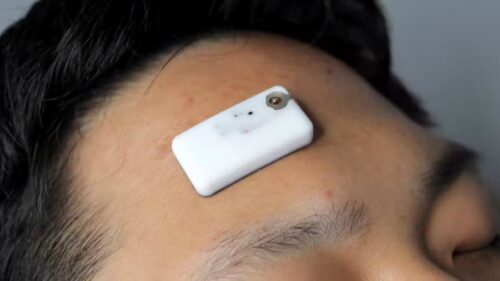
Researchers from Georgia Tech and Seoul National University have developed a wearable forehead patch that can estimate changes in brain water during sleep, offering a way to study the brain’s glymphatic system outside hospitals and laboratories. The researchers say the device could help monitor the brain’s waste-clearing process over multiple nights at home, although further studies are needed to confirm how accurately it reflects glymphatic activity.
The patch, which is less than 1 cm thick, attaches to the forehead and operates wirelessly using a rechargeable battery. Unlike MRI-based methods that require people to remain still in a clinical setting, the wearable can be used overnight at home, allowing long-term sleep monitoring.
Instead of measuring cerebrospinal fluid directly, the device estimates changes in brain water using near-infrared spectroscopy. It emits three wavelengths of near-infrared light into the forehead. Two wavelengths measure oxygenated and deoxygenated hemoglobin, while the third detects water. By analyzing the reflected light, the system estimates changes in total brain water. An increase in brain water without a corresponding rise in blood volume may indicate cerebrospinal fluid movement linked to the brain’s waste-clearing process.
The wearable integrates flexible printed circuits, multiple LEDs, a multispectral photodetector, Bluetooth Low Energy connectivity, and a rechargeable 110 mAh lithium-polymer battery. The prototype consumes about 70-75 mW of power and operates continuously for around 5.5 hours. Mechanical tests showed the electronics can bend to match the forehead, while thermal tests kept skin temperature below the safety limit of 41°C.
The researchers evaluated the patch during exercise, rest, and controlled breath-holding experiments. These tests produced repeatable changes in measured brain water, indicating that the optical sensing system can detect physiological changes. Computer simulations also showed that enough light reaches brain tissue beneath the skull to monitor changes in the cortex.
During overnight sleep studies, the patch tracked brain water changes across different sleep stages. The measurements matched earlier findings showing that glymphatic activity is generally higher during non-REM sleep and lower during REM sleep. The device also recorded signals related to breathing, heart rate, and slow-wave sleep, allowing multiple sleep-related parameters to be monitored simultaneously.
