

An experimental wearable device uses focused ultrasound and brain activity monitoring to target REM sleep, showing promising results in a small study involving 28 participants.
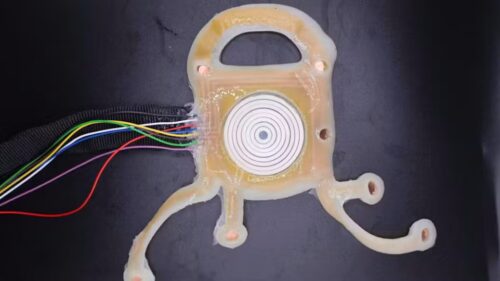
The University of Texas at Austin has developed the experimental NEUSLeeP patch, a wearable bioelectronic device that combines focused ultrasound with brain activity monitoring to target rapid eye movement (REM) sleep. In a study involving 28 participants, the system helped users reach REM sleep about 43 minutes earlier and spend roughly 16 additional minutes in REM sleep on average compared with sham treatment.
The patch is designed to sit against the side of the head and perform two functions simultaneously. Integrated electrophysiological sensors continuously record brain activity and sleep stages, while low-intensity focused ultrasound is directed towards the brain’s subthalamic nucleus, a structure involved in regulating sleep.
Researchers reported that overall REM sleep increased by 4.6 per cent without significantly changing other sleep stages. Participants also described the device as comfortable to wear overnight and reported minimal adverse effects.
The technology could offer an alternative approach to addressing disrupted REM sleep, which has been associated with conditions including depression, anxiety and post-traumatic stress disorder. Unlike treatments relying on medication or invasive surgery, the patch aims to influence neural circuits externally through targeted ultrasound.
From a hardware perspective, the flexible system incorporates an eight-channel concentric-ring ultrasound transducer array, custom hydrogel electrodes for electroencephalogram (EEG), electrooculogram (EOG) and electromyography (EMG) recordings, and a reusable bioadhesive substrate. The complete device weighs about 103 grams and is designed for overnight use.
Researchers also observed increased heart-rate variability in healthy participants, while functional magnetic resonance imaging (MRI) measurements indicated changes in brain circuits associated with emotional processing. However, the study remains relatively small, and larger clinical trials are needed to establish effectiveness and long-term safety.
If subsequent research confirms these findings, the approach could demonstrate how wearable electronics and targeted ultrasound may support sleep-related applications without implanted electrodes, pharmaceuticals or surgery.