




Can a wearable detect rising stress and change what a patient hears? An Indian system uses heart-rate variability to adapt music during cancer treatment.
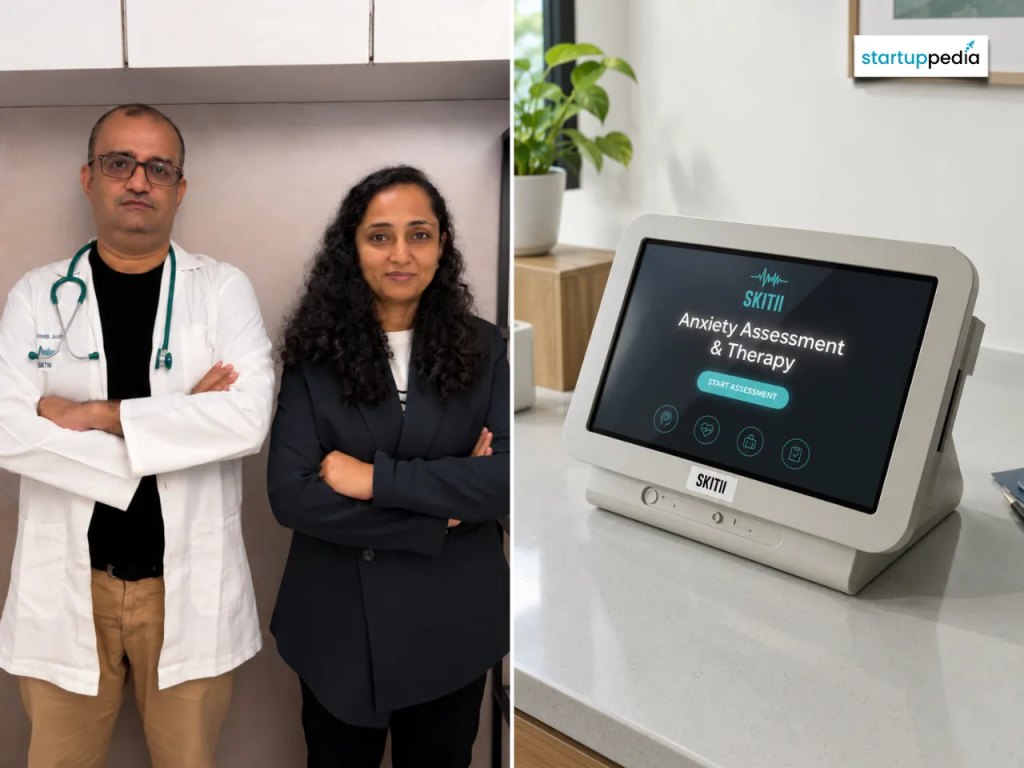
Mindful Gurukul has developed Skitii, a wearable-based system that continuously monitors heart-rate variability (HRV) and uses the signal to adapt music for patients undergoing cancer treatment. The system is designed as a closed loop, where physiological data is measured, interpreted, and used to determine the audio response.
At the sensing layer, Skitii uses a chest-worn heart-rate sensor to capture R-R intervals continuously. The system calculates the root mean square of successive differences (RMSSD), an HRV measure used to assess changes in autonomic nervous system activity. The resulting signal provides the input for determining the patient’s physiological state in real time.
The system then uses that information to select or generate music according to the patient’s current state. Rather than playing a fixed playlist, its adaptive approach changes the audio response as the physiological signal changes. The company’s platform describes this as a three-stage loop of read, understand, and respond.
The technology also addresses a practical challenge in real-time HRV systems: there is initially not enough data to calculate a stable HRV measure. The clinical protocol describes a two-phase adaptive algorithm, with the initial phase using heart rate as a proxy for stress before transitioning to RMSSD-based adaptation. Different heart-rate ranges are mapped to grounding, calming, restorative, or uplifting music responses.
The system is being evaluated in a randomised controlled trial involving head and neck cancer patients undergoing chemotherapy and radiotherapy. The study protocol lists 70 participants and aims to assess whether RMSSD-based adaptive music can reduce treatment-related anxiety.
Skitii is currently classified as an investigational, non-pharmacological medical device. Its CDSCO Class B licensing is in progress, and the system is not intended to diagnose, cure, or prevent cancer.
The technology therefore differs from conventional music-therapy systems mainly in its feedback loop: instead of asking a patient to select music or follow a fixed programme, it uses a physiological signal to continuously inform the intervention. Whether that closed-loop approach produces a measurable clinical benefit is what the ongoing trial is designed to establish.

