


Researchers in the U.S. National Renewable Energy Laboratory have built the Ultra-Low Inductance Smart (ULIS) power module, a compact, low-cost design that delivers record energy density and ultrafast switching.
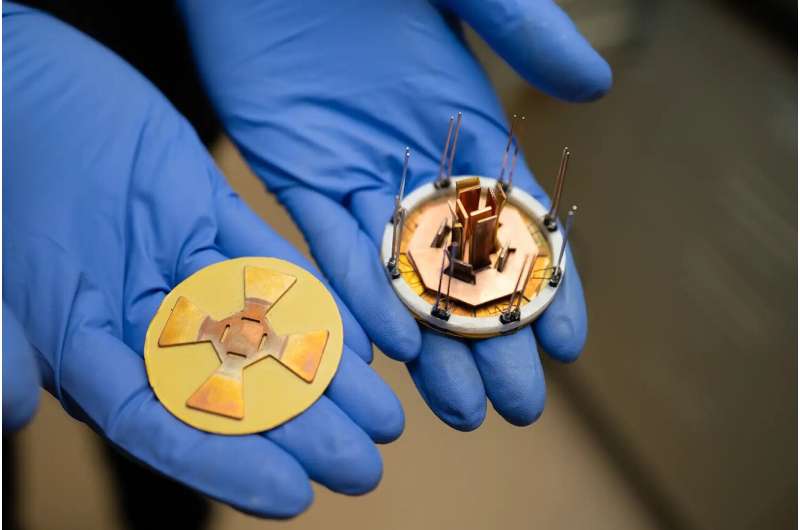
A team in the U.S. National Renewable Energy Laboratory (NREL) has developed what they call the world’s fastest and most efficient silicon carbide (SiC) power module—one that could help meet the surging global demand for electricity from AI-driven data centers, aviation, and heavy-duty vehicles.

The device, dubbed the Ultra-Low Inductance Smart (ULIS) power module, combines unprecedented efficiency, low cost, and ultrafast switching performance. Early testing shows ULIS achieves up to five times greater energy density than previous designs, while keeping manufacturing costs in the hundreds of dollars range, not thousands.
At its core, ULIS is a 1200-volt, 400-amp module with parasitic inductance levels seven to nine times lower than today’s best-in-class solutions—a key hurdle in power conversion. This translates into the ability to “squeeze” significantly more usable power out of existing electricity supplies, a capability researchers say is critical as global energy demand outpaces new generation capacity.
Beyond efficiency, ULIS is compact, lightweight, and predictive. The module actively monitors its own health and can forecast component failure before it happens—a critical safety layer for applications like advanced aircraft or military vehicles, where reliability can mean survival.
What sets ULIS apart is its radical new design. Instead of a bulky brick-like package, its flat, octagonal “pancake” structure houses more semiconductor devices in a smaller footprint. A custom current-routing method enables near-perfect magnetic flux cancellation, ensuring clean, low-loss energy output.
ULIS also breaks with convention in its materials: rather than rigid ceramic bonding, it uses a flexible polymer (Temprion) layered with copper, cutting both weight and cost. In addition, it supports wireless operation—each module can be slotted into different systems without external control cables, giving it a modular, Lego-like adaptability.
The research team has further future-proofed ULIS for next-generation semiconductors, including gallium nitride and gallium oxide, ensuring the design can evolve with the industry.Potential applications range from modernizing power grids and data centers to electrifying aircraft and enabling future fusion reactors. As NREL’s Faisal Khan notes, ULIS is designed not just as a lab achievement but as a deployable, scalable technology capable of reshaping how electricity is converted and delivered worldwide.