




New 32-bit device brings 1Gbps TSN Ethernet, CAN-XL and post-quantum crypto to cost-sensitive vehicle control systems
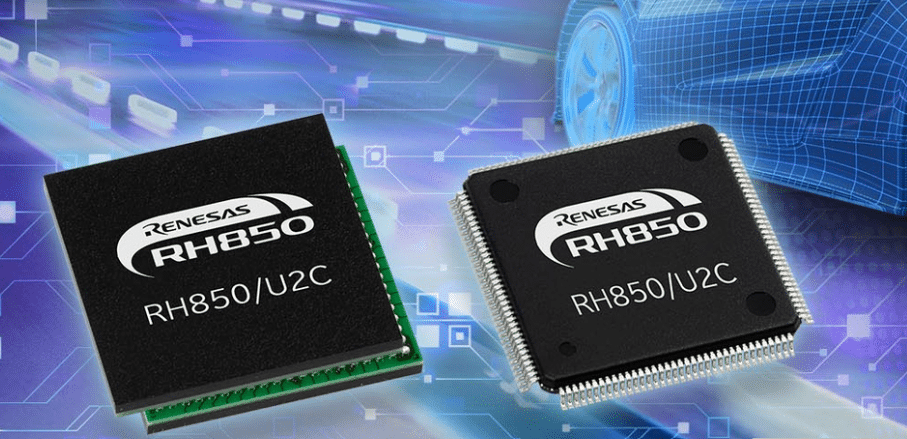
A new 28nm automotive microcontroller by Renesas Electronics Corporation has entered the market, aiming to balance performance, safety and power efficiency for next-generation vehicle control systems. The 32-bit device expands an established MCU family that has shipped more than 4 billion units since 2013, and is positioned as a scalable option for chassis, safety and body applications.
Built for modern electrical/electronic (E/E) architectures, the MCU integrates four CPU cores running at up to 320 MHz, including dual lockstep cores for safety-critical workloads. It supports up to 8 MB of on-chip flash and is designed for ASIL D systems under International Organization for Standardization ISO 26262 frameworks.
The key features are:
- 28nm process with reduced active and standby power
- Quad-core architecture up to 320 MHz (dual lockstep support)
- Up to 8 MB on-chip flash memory
- 1Gbps/100Mbps TSN Ethernet, CAN-XL and legacy bus support
- ASIL D functional safety and hardware-accelerated post-quantum security
The device targets a wide range of applications, including battery management systems, lighting and motor control, and other general-purpose safety systems in passenger cars and motorcycles. It also enables straightforward migration from earlier RH850/P1x and F1x generations, helping OEMs and Tier 1s update ECUs for domain- and zone-based architectures without full redesigns.
Connectivity is a key focus. The MCU supports Ethernet 10BASE-T1S and TSN at 1Gbps/100Mbps, alongside CAN-XL and I3C for emerging network topologies. Legacy interfaces including CAN-FD, LIN, UART, CXPI, I²C, I²S and PSI5 remain onboard, enabling phased upgrades and mixed ECU environments.
Security has been reinforced to meet evolving regulatory demands. The device aligns with ISO/SAE 21434 cybersecurity requirements and incorporates hardware accelerators for cryptographic workloads, including post-quantum cryptography and region-specific algorithms. Offloading crypto tasks reduces CPU overhead while maintaining throughput.
Manufactured on a 28nm process, the MCU also lowers active and standby power consumption. A dedicated deep standby mode reduces energy draw during intermittent operation, easing thermal constraints and supporting tighter environmental compliance targets.Development support includes automotive-qualified software, toolchains and starter kits to speed evaluation and ASIL D project deployment.


